The Buyer Shouldn’t Be Your Rep’s First Practice Session
Every live buyer a rep meets is a chance to win—or an expensive rehearsal. The best field teams separate learning from doing.
Markets, capital, and the macro picture.
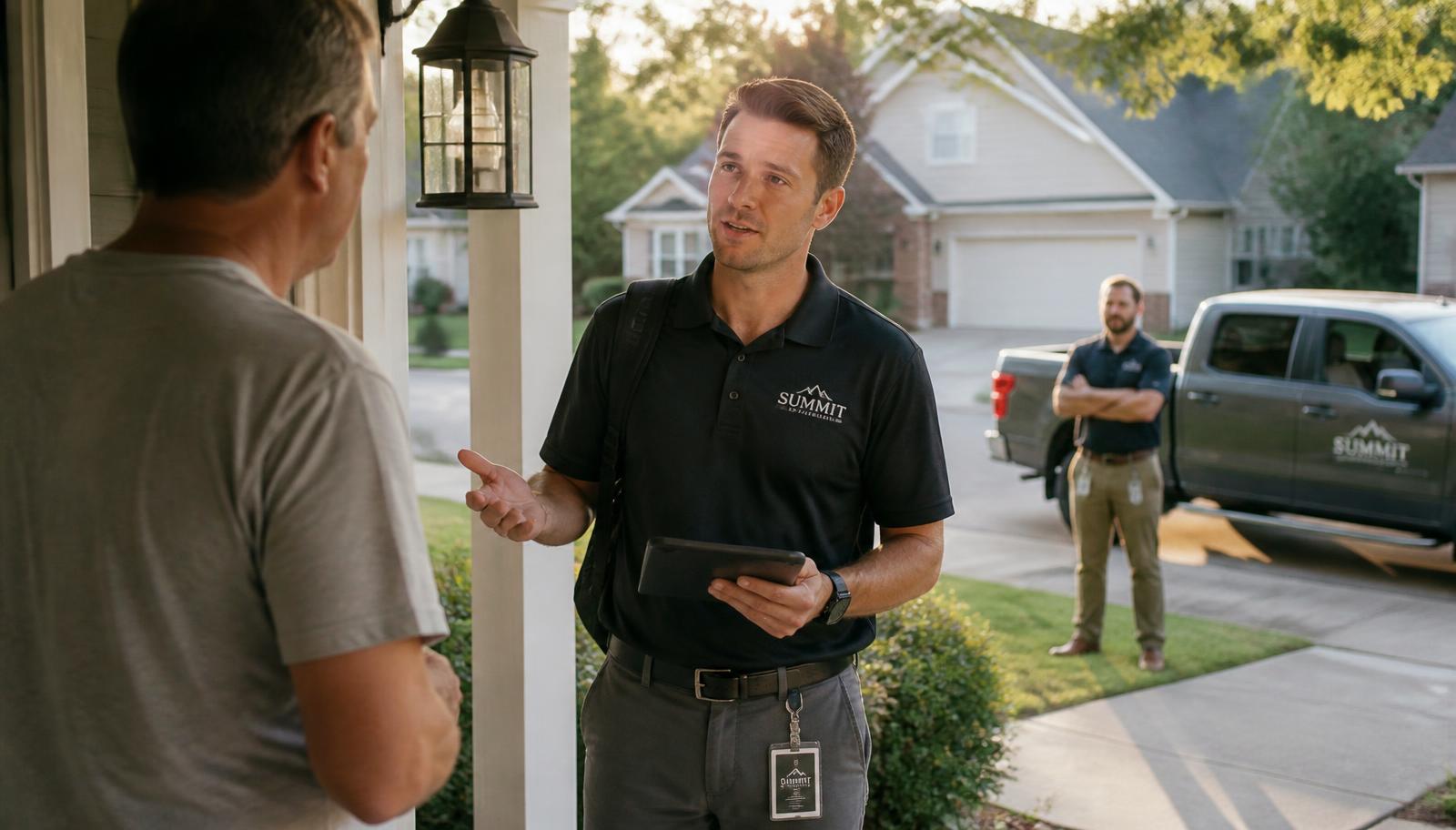
A playbook gives your team the right moves. Performance is what happens when the door opens, the buyer is skeptical, and the rep is on door 39.
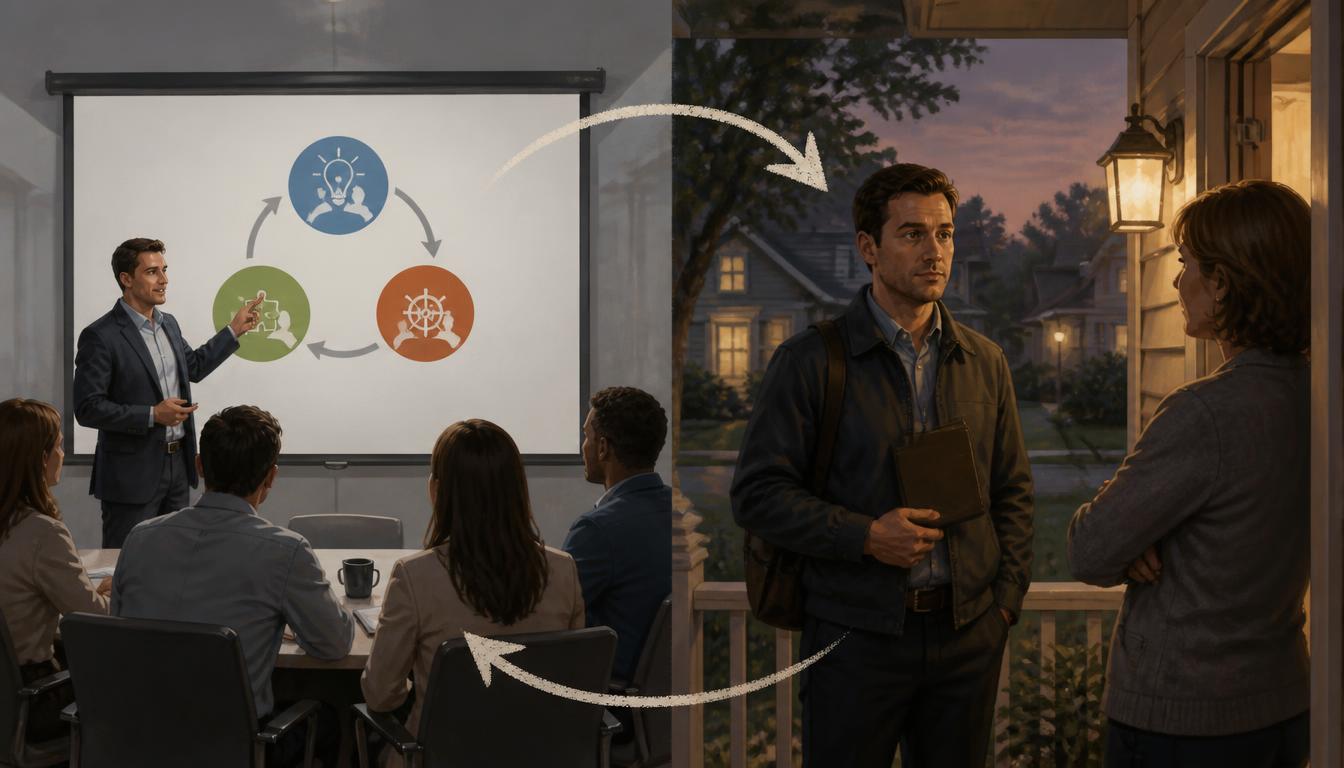
The Challenger Sale teaches reps to teach, tailor, and take control. But knowing the framework is not the same as having the composure to use it on a front porch at dusk.
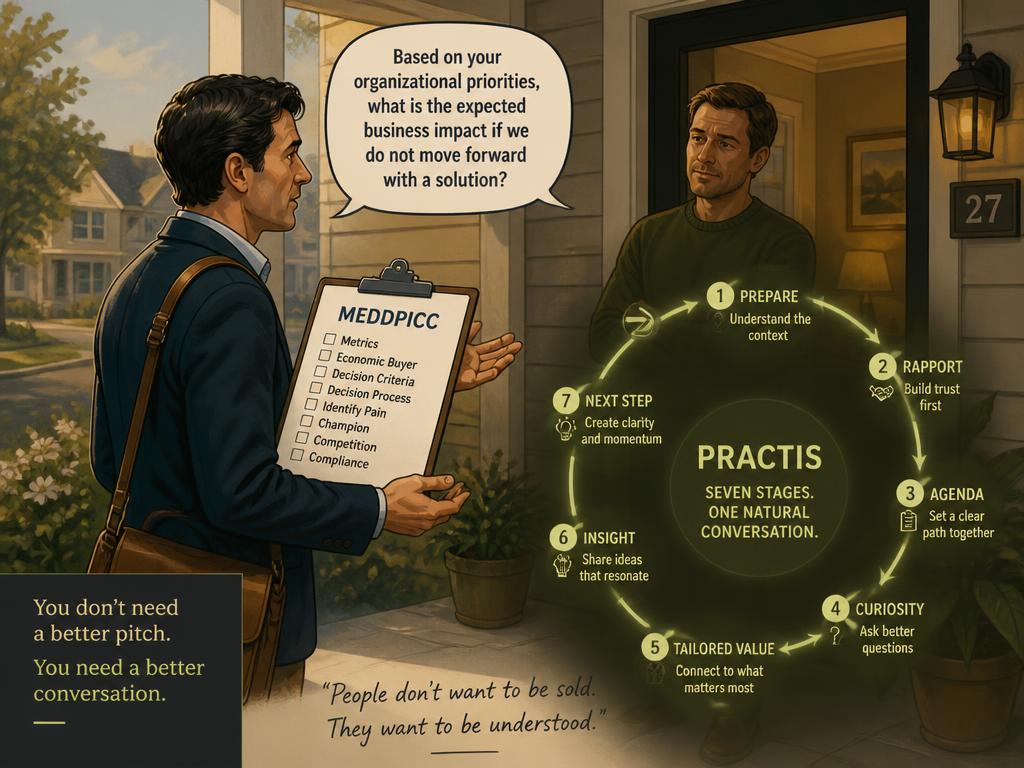
A rep can pass a certification on MEDDIC, Sandler, or Challenger and still fall apart at door 39. The gap is not knowledge. It is performable skill.
MEDDPICC is a powerful qualification framework. But it is not what a rep says at the door, and it is not what turns a checklist into a conversation.
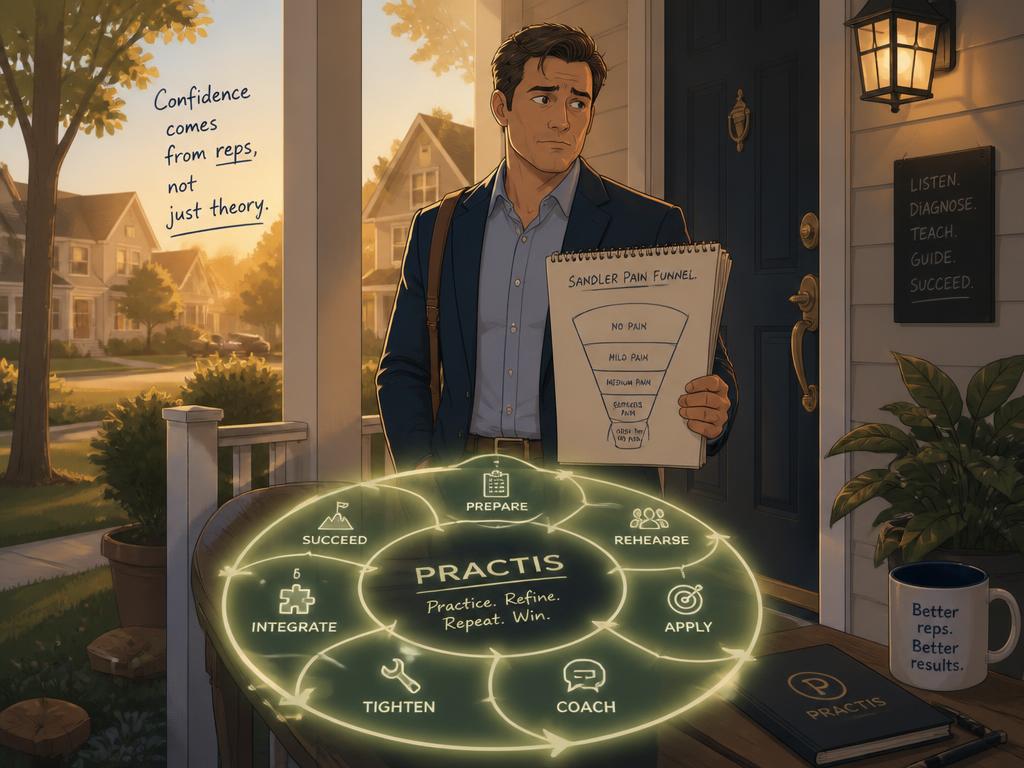
Sandler teaches the right conversation. But field sales is a performance sport, and even the best methodology means nothing without repetition.
A playbook is a document. A buyer conversation is a live event. The distance between them is where most field sales teams lose the game.
A rep can memorize every technique in the book and still freeze at the door. The gap between knowing and doing is where training ends and testing begins.
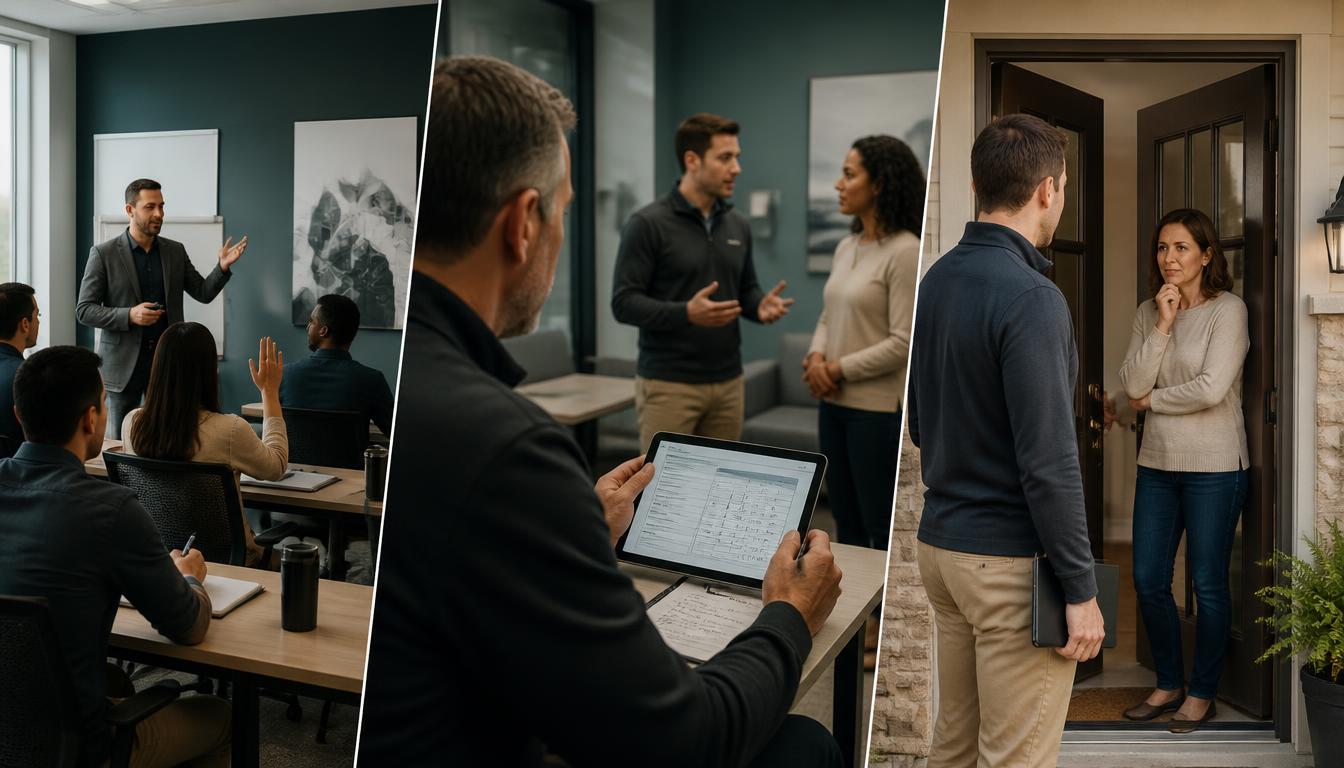
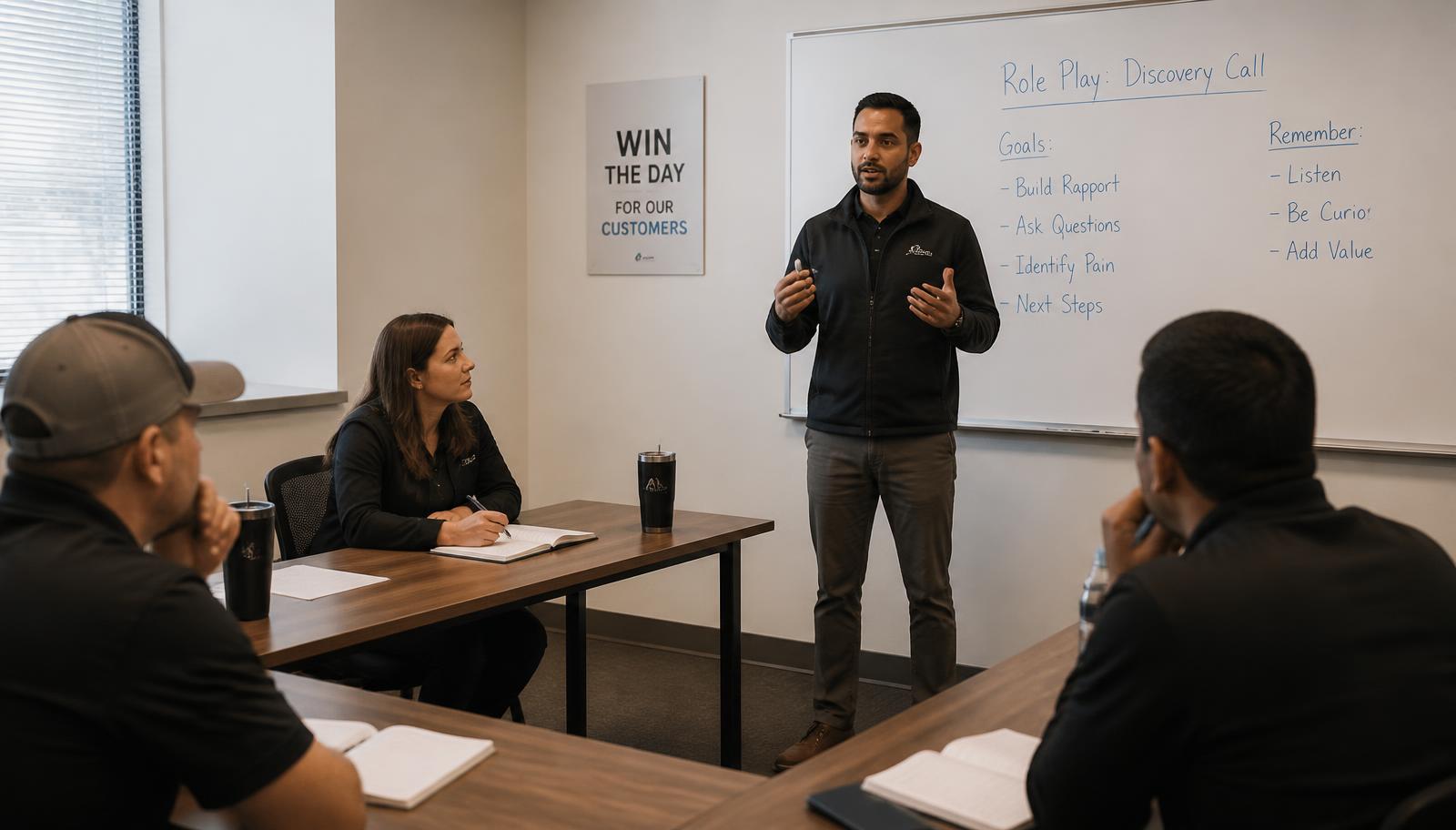
Most roleplays are theater. Real buyers pay the price when reps treat live conversations as their first honest rehearsal.
Sales teams chase leads before they train performers. In field sales, the pipeline is only as good as the rep who shows up at the door.
Sales readiness usually fails because we treat methodology and messaging as separate purchases. A field operator makes the case for one integrated loop.
A three-day sales bootcamp can feel like a transformation. Six months later, most of the value has evaporated. The difference is not the content.
Before you buy another layer for your sales enablement stack, you need to know whether your managers, your workflow, and your compensation model can support it.
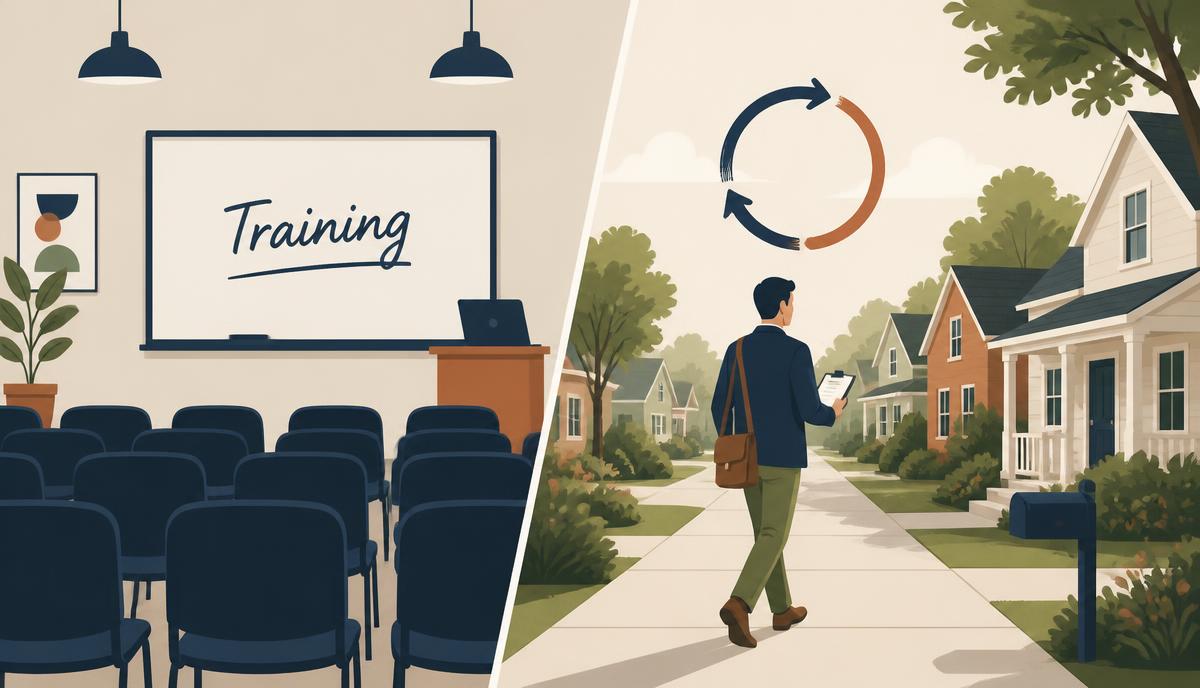
Training tells reps what to do. Execution is what they actually do on the fortieth door. PRACTIS is built for the space between the two.
The average US sales enablement team spends 70% of its budget on content and training. The part that actually turns knowledge into behavior gets whatever is left over.
Not a rip-and-replace, and not a clean merge either. Here is what actually changes in week one, month two and quarter two when a field team keeps SPIN or Sandler and puts a performance loop underneath it.
American field-sales teams have a training layer and a tracking layer. What is missing is the thing in between — the part that governs whether a rep can do on door thirty-nine what they learned in the classroom in March.
SPIN, Sandler, Challenger and MEDDIC all assume a scheduled meeting. Field sales runs on different physics. The interesting question about PRACTIS is not whether it is another methodology, but what category it actually belongs to.
Sequencing is the part nobody sells you. Teams that install a practice loop before their reps have any shared language end up scoring noise. Teams that install it after methodology training finally get the training to stick.


Most US field-sales teams already own five tools that touch enablement. None of them govern what the rep actually does at the door. That gap is the slot PRACTIS is built for.
Most HVAC, plumbing, and roofing shops lose the sale in the first ninety seconds at the door, and then spend money fixing the last ninety.
Quality scores go up. Customers stay angry. The gap between those two facts is where most contact-center improvement programs quietly die.
Headline default rates remain near record lows. Inside the funds, mark-to-model accounting is doing a great deal of work.
Two cuts are priced in. Three would require something to break.
The first-quarter fundraising numbers are out. The story is the LPs who did not return calls.
A Houston trading desk has spent two years buying long-dated capacity from Southeastern utilities. The utilities are only beginning to notice.