Best Sales Training Platforms in 2026
LMS modules, bootcamp retreats, AI roleplay sims, conversation intelligence, and practice operating systems. The platforms US sales teams are actually buying this year — and where each one earns its keep.
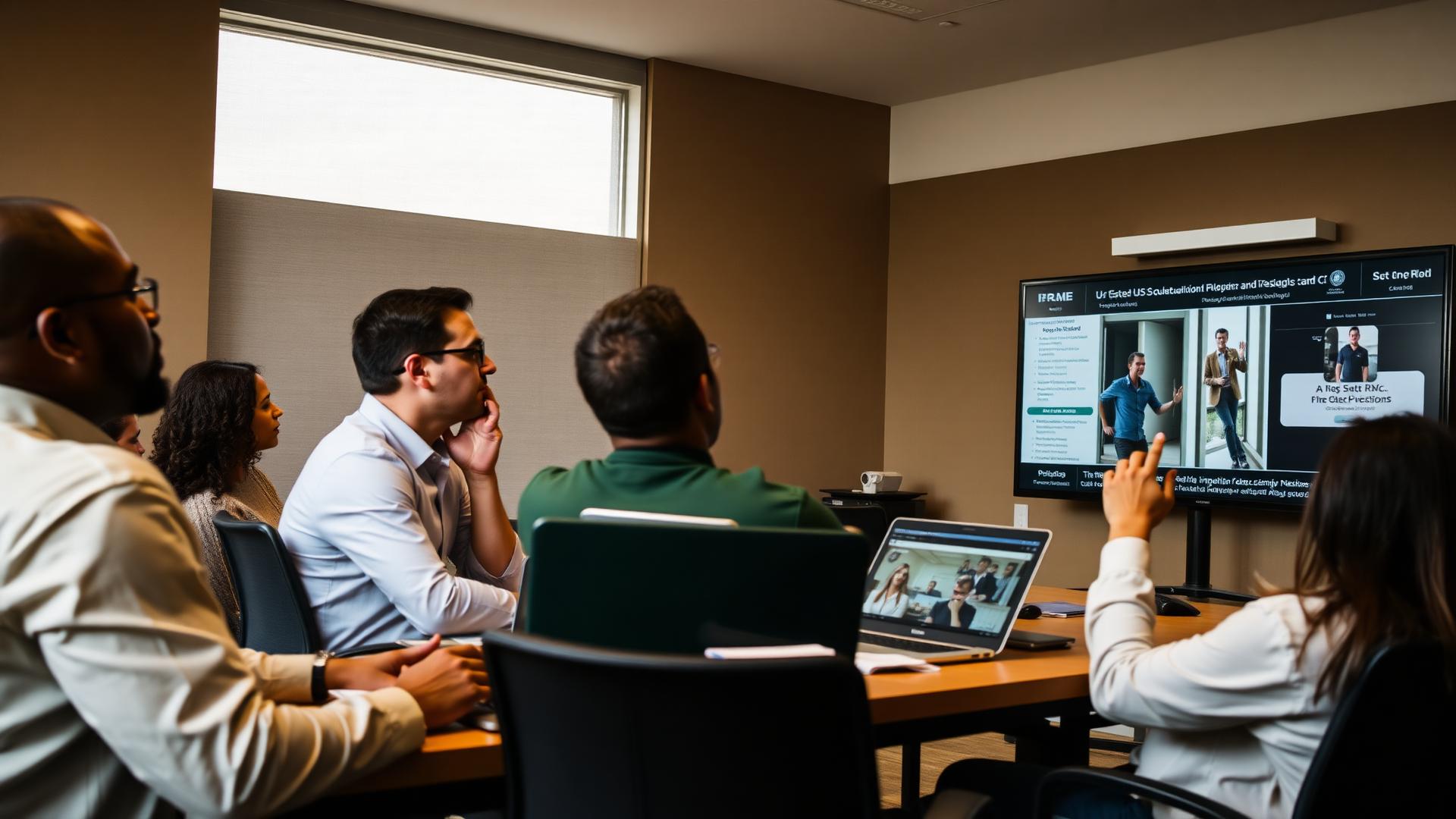
A sales enablement leader at a mid-market roofing company in Tennessee told me last month that she had evaluated eleven sales training platforms in eighteen months. She had a spreadsheet. Each row had a logo, a price per seat, a list of features, and a one-line verdict. Eleven rows, eleven verdicts, and she still did not know what to buy. 'They all do something,' she said. 'None of them does the one thing I actually need.'
That sentence is the state of the sales training platform market in 2026. The category has fragmented faster than buyers can make sense of it. There are learning management systems that host courses. There are bootcamp providers that fly in for a week. There are AI roleplay tools that generate synthetic buyers. There are conversation intelligence platforms that record calls. And there are practice operating systems that govern what a rep does at the door. They are not interchangeable, but the marketing copy makes them sound like they are.
"The question is never 'what is the best platform.' It is 'what is the platform best at, and does that match where my reps actually break.'"
How to read this guide
I have run field sales operations in roofing, solar, HVAC, and pest control across the Southeast, and I have bought, piloted, or observed most of the categories below. What follows is not a ranked leaderboard. It is a category map. For each category I name what it does well, where it falls short, and the kind of team that should consider it. I will be honest about where the PRACTIS Method — which I have been testing in pilot form with an Atlanta roofing group since early 2026 — fits, because that is the one I know from the inside, and pretending otherwise would be worse than disclosing it.
The categories are ordered from the most established to the newest, because that is roughly the order in which a sales leader typically encounters them as a team scales.
1. Sales learning management systems (LMS)
The category: platforms that host courses, track completion, quiz reps on recall, and produce a compliance trail. Think Lessonly (now Seismic Learning), MindTickle, Allego, and the learning modules bundled into CRM suites. They are the default purchase of a sales enablement team that needs to prove training happened.
What they do well: distribution and documentation. If you have five hundred reps across six regions and you need every one of them to learn the new pricing model by Friday, an LMS is the right tool. It scales knowledge transfer cheaply, it records who finished, and it gives legal and finance something to point at during an audit. For product launches, compliance topics, and onboarding fundamentals, nothing else touches it on cost-per-rep.
Where they fall short: behavior. An LMS verifies that a rep can recall a concept. It does not verify that the rep can execute it under pressure. Completion rates go up, quiz scores go up, and close rates stay flat. The pattern is so common it has a name in enablement circles: the completion trap. Managers see green checkmarks and assume readiness. The field disagrees.
Who should buy it: any team larger than about fifty reps that needs consistent, auditable knowledge distribution. Buy it for the knowledge layer. Do not buy it expecting it to move the close rate.
2. Sales bootcamps and intensive training events
The category: instructor-led programs, often off-site, that compress a methodology into a few days. Sandler, Challenger, and The Brooks Group run these, as do dozens of regional providers. Some are vendor-specific, some are methodology-agnostic.
What they do well: energy and ignition. A good bootcamp changes how a rep thinks about selling. It introduces vocabulary, it creates shared language across a team, and it produces a genuine motivation spike. I have seen reps come back from a Challenger workshop genuinely rethinking how they open a call. That is real. It is also temporary.
Where they fall short: durability. The classic finding in sales training research, repeated across decades, is that the majority of knowledge from a single event decays within weeks absent reinforcement. I have tracked this myself: bootcamp-only groups spike about eighteen percent in close rate the first month, then give it back by month four. The bootcamp is a launch event, not an operating system. Treat it as one and it is excellent. Treat it as the whole program and you are paying for a spike you will not keep.
Who should buy it: teams launching a new methodology, onboarding a cohort, or needing a shared reset. Pair it with a practice layer, which I will get to below.
3. AI roleplay and simulation platforms
The category: tools that generate synthetic buyers and let reps rehearse conversations against them. Second Nature, Hyperbound, and the simulation module inside the PRACTIS platform live here, alongside a fast-growing crop of LLM-driven startups. This is the category that has moved fastest since 2024, and it is where most of the venture money has gone.
What they do well: reps and safety. An AI roleplay tool lets a rep get fifty reps before they meet a real buyer, and it does so without burning a coach's calendar or a friendly customer's patience. The best ones score specific behaviors — did the rep ask the diagnostic question, did they handle the objection, did they make the ask — and they let a manager review the transcript. For new hires and for low-stakes reps, this is a meaningful upgrade over reading a script into a mirror.
Where they fall short: emotional fidelity. A synthetic buyer cannot replicate the physiological reality of a stranger at the door who did not ask to be interrupted. The AI is patient, the AI does not judge, and the AI never smells like a bad day. Reps who ace the simulation still freeze in the field, because the simulation trains the conversation but not the performer. The other limit is observation: an AI can score what the rep said, but a human coach still has to decide whether the rep's state, courage, and judgment are field-ready. The simulation is a strong practice environment. It is not a complete one.
Who should buy it: teams with a hiring funnel that produces more new reps than coaches can personally rehearse with, and teams whose deals are longer and more call-based than door-based. For high-frequency field sales, use it as one layer of a practice stack, not the whole stack.
4. Conversation intelligence platforms
The category: tools that record, transcribe, and analyze sales calls. Gong and Chorus are the names most buyers know. They surface patterns — talk time, monologue length, keyword usage, next-step mentions — and they give managers a library to coach from.
What they do well: visibility and coaching fuel for recorded channels. If your reps sell over Zoom or phone, conversation intelligence is now table stakes. The coaching moments it surfaces are real: the rep who talked seventy percent of the call, the rep who never asked for a next step, the rep who mentioned a competitor exactly once and dropped it. For inside sales, it has materially improved coaching quality.
Where they fall short: the unrecorded interaction. Most door-to-door and in-home sales interactions are simply not recorded, for practical and legal reasons that vary by state — a real constraint for teams operating across two-party-consent states like Florida, Pennsylvania, and Washington. Conversation intelligence is brilliant for what it captures and blind to what it cannot. For field sales teams, it covers the phone calls and the video meetings and misses the doorstep, which is where the actual selling happens.
Who should buy it: inside sales teams and field teams with a meaningful phone or video component. Do not assume it will cover the door. It will not.
5. Sales methodology certifications
The category: structured programs tied to a named methodology — SPIN, Sandler, Challenger, MEDDPICC — where reps complete training and earn a credential. These overlap with bootcamps but extend into ongoing certification tracks.
What they do well: shared mental model. A certified team speaks the same language. When a manager says 'go back to the implication questions,' every rep knows what that means. Certification also creates an external standard that hiring managers and buyers recognize, which has real value in enterprise sales hiring.
Where they fall short: certification measures the rep's knowledge of the methodology, not their performance under it. A rep can be Challenger-certified and still fail to deliver a reframe in a live call, because certification tested recall and the field demands execution. Methodologies also tend to be optimized for scheduled, longer-form conversations. In high-frequency field sales, the buyer is a stranger on a porch with three minutes of patience, and the playbook has to be carried in the body, not in a binder.
Who should buy it: enterprise and mid-market teams running consultative sales motions. For field sales, treat the methodology as the content layer and add a practice layer that tests whether the rep can actually run it.
6. Practice operating systems (where PRACTIS sits)
The category: the newest and the one I know best. A practice operating system governs what a rep does before, during, and after every interaction — not the conversation itself, but the performer. This is where the PRACTIS Method lives.
What it does well: the part the other categories do not touch. The PRACTIS Method is built around a seven-stage loop — Presence, Reveal, Agency, Clarify, Truth, Invite, Score — and nine observable performance dimensions such as Inner Game, Trust, Information, Competitive, and Long Game. The loop is what a rep carries in their head at the door. The dimensions are what a manager writes down after riding along. Together they produce the one artifact that no LMS, bootcamp, AI roleplay tool, or conversation intelligence platform produces on its own: a behavioral score for an interaction that nobody recorded.
The part I respect most about the published framework is its honesty. The methodology page at practis.ai frames its outcome claims as hypotheses being tested through instrumented pilots, not as proven lifts. I respect that more than I respect a vendor who claims a forty percent close-rate increase with no data. But it does mean buyers should run their own pilots rather than adopting wholesale.
Where it falls short: management calories. A practice operating system is not a buy-it-and-forget-it platform. It requires managers who can observe, calibrate, and give feedback without turning into script police. If your managers are not good at that, the system becomes a compliance exercise and reps game it. I have seen this happen. It is worse than no system at all. It is also newer and less validated than the established categories — the honest caveat that matters most.
Who should buy it: high-frequency field sales teams — roofing, solar, pest control, home security, telecom, insurance — where the gap between training and performance is the actual constraint, and where managers have the bandwidth to coach. Do not buy it if you cannot commit to the coaching cadence. The loop only works if someone closes it.
How the categories fit together
The most common mistake I see is treating these categories as competitors. They are not. A mature US sales enablement stack in 2026 has room for several of them at once, each doing the thing it does best. The LMS distributes the knowledge. The bootcamp ignites the team. The certification gives them shared language. The AI roleplay tool gives new reps safe reps. Conversation intelligence coaches the recorded channels. And the practice operating system governs what happens at the door, in the home, and on the porch — the unrecorded interactions that determine whether the rest of the stack pays off.
The stack hole that most teams do not realize they have is the last one. They own five tools that touch enablement, and none of them governs what the rep actually does at the door. That gap is the slot a practice operating system is built for. It is also, not coincidentally, where I have seen the largest behavior change in my own pilots — not because the other tools are bad, but because none of them was ever trying to do that job.
The questions to ask before you buy
Before any demo, write down where your reps actually break. Is it knowledge, in which case the LMS is the lever. Is it energy and shared language, in which case a bootcamp. Is it reps, in which case AI roleplay. Is it recorded-call coaching, in which case conversation intelligence. Is it execution under pressure in unrecorded interactions, in which case a practice operating system. The category you buy should match the failure mode you have, not the failure mode the vendor's deck assumes you have.
The second question is whether your managers can run it. Every category on this list depends on a manager who can turn insight into coaching. The LMS needs someone to interpret the completion data. The bootcamp needs follow-through. The AI roleplay tool needs a human to judge readiness. Conversation intelligence needs a coach who reviews the calls. The practice operating system needs a manager who closes the loop after every interaction. If your managers are not coaching-capable, no platform will save you. Buy the platform that fits the managers you have, or invest in the managers first.
The third question is measurement. Ask the vendor what they measure and how they prove it works. If the answer is completion rates, you are buying a knowledge tool. If the answer is a self-reported lift with no methodology, you are buying hope. If the answer is a structured pilot with defined outcomes and the honest admission that validation is ongoing, you are buying a system that takes itself seriously. That last answer is the one I trust, and it is the answer the PRACTIS team gives publicly.
The short answer
The best sales training platform in 2026 is the one that matches your failure mode. There is no single winner, and anyone who tells you there is is selling you their category. The LMS wins on scale and audit. The bootcamp wins on ignition. AI roleplay wins on reps. Conversation intelligence wins on recorded-call coaching. Methodology certification wins on shared language. And a practice operating system like the PRACTIS Method wins on the unrecorded interaction — the doorstep, the in-home visit, the field call where the real money is made and where no other platform is watching.
Buy the category that closes the gap your reps actually have. Then commit to running it. The platform is the easier half of that sentence. The running is the harder half, and it is the half that determines whether any of this works.
More from Business

Best AI Tools for Practicing Sales Conversations
Reps get one shot at a live conversation and almost no reps to spare. Here are the AI tools U.S. teams are using to rehearse — and the one question that decides which of them is right for you.

Top AI Tools for Sales Training and Coaching
The AI tools U.S. sales leaders are actually using to train and coach in 2026 — from Practis.ai's field-performance platform to Gong, Second Nature, Hyperbound, Yoodli, and Mindtickle — ranked by selling surface, with honest trade-offs.

Best AI Sales Roleplay Platforms in 2026
A U.S. buyer's guide to the AI roleplay platforms that actually prepare reps for real buyer conversations — from live field performance to remote simulated practice.