Top AI Sales Coaching & Roleplay Platforms for 2026
A U.S. buyer's guide to the platforms using AI to coach real calls and simulate prospects before reps touch live pipeline.
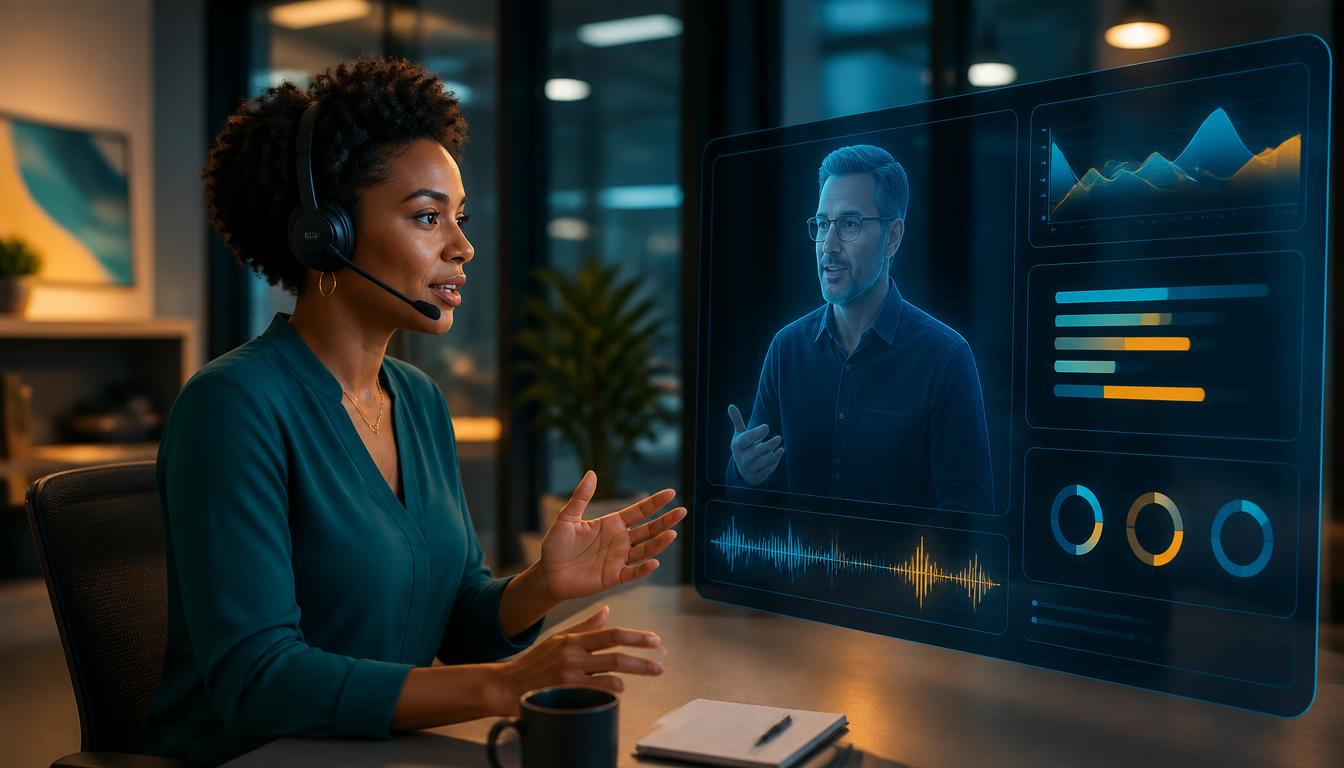
The fastest-growing corner of the sales-tech market in 2026 is the intersection of coaching and roleplay. U.S. sales leaders have realized that waiting for a bad call to happen, then reviewing the recording, is too slow. They want reps to practice against realistic AI buyers before they ever dial a prospect, and they want live-call coaching that feeds directly into that practice loop. The platforms that combine both are becoming the new standard.
This guide focuses on the top AI sales coaching and roleplay platforms for U.S. teams in 2026. It separates conversation-intelligence tools that coach from real calls, AI roleplay platforms that simulate prospects, and the live-performance systems that train what no recording captures. The goal is simple: match the platform to the moment where your reps need help.
Why coaching and roleplay are merging
The old model was sequential. A rep took a call, a manager reviewed it, and the rep tried to do better next time. The new model is continuous. A call gets analyzed automatically, the platform identifies a specific weakness — discovery questions, objection handling, talk ratio — and the rep practices that exact scenario with an AI persona before the next live conversation.
This matters because sales is a performance sport, not a knowledge test. Reps do not forget the pitch; they freeze, rush, or drift when pressure rises. Coaching tells them what to fix. Roleplay gives them the reps to fix it. A platform that does only one leaves the loop half closed.
1. Gong: coaching from the recorded conversation
Gong remains the category leader for U.S. teams that sell over video or phone. It records, transcribes, and analyzes calls, then surfaces coachable moments at scale. Managers can see which reps dominate talk time, which deals are at risk, and which objections keep appearing. For inside sales and SaaS teams, Gong is the foundation of data-driven coaching.
Its roleplay layer is lighter. Gong will tell a rep what went wrong; it will not let them practice the fix in a simulated conversation. Teams that want a full coach-and-practice loop usually pair Gong with a dedicated roleplay tool.
2. Chorus by ZoomInfo: coaching with account context
Chorus competes with Gong on transcription and analytics but adds ZoomInfo's account and buyer data. A manager can coach a rep not just on what was said, but on who was in the room, what the account has done before, and where the deal stands. That context makes feedback sharper and more actionable.
Like Gong, Chorus is strongest for recorded remote conversations. It is a coaching layer, not a practice environment. Teams looking for AI roleplay will need another tool.
3. Second Nature: certification-grade AI roleplay
Second Nature is the enterprise standard for structured, certification-oriented roleplay. Its AI personas run rigorous simulations, and reps must pass defined scenarios before they are marked ready for live pipeline. Large U.S. companies use it to reduce the risk of putting underprepared reps in front of buyers.
The trade-off is weight. Implementations take time, admin overhead is real, and the platform is priced for enterprise scope. It is also a remote-conversation simulator. If the readiness problem is live face-to-face performance, Second Nature is not the right surface.
4. Hyperbound: the AI buyer for cold-call practice
Hyperbound popularized the AI buyer for phone-based selling. Reps dial into a simulated prospect, run a cold call or discovery conversation, and get scored against a rubric. It is fast to deploy, priced accessibly, and solves a specific problem: new SDRs no longer burn live prospects learning to handle rejection.
The limitation is the surface. Hyperbound practices recorded, remote calls. It assumes the buyer is a voice and the evidence is a recording. That is a different universe from high-frequency, face-to-face selling where no CRM field sees what happened.
5. Yoodli: lightweight AI communication coaching
Yoodli started as AI speech coaching and expanded into sales roleplay. It is inexpensive, quick to set up, and useful for individual reps and small teams who need practice volume without enterprise complexity. For U.S. teams testing AI roleplay for the first time, Yoodli is a low-risk entry point.
The ceiling is depth. The scoring rubrics are lighter and the methodology integration is minimal. A growing team will outgrow it once it needs structured certification and manager workflows. Yoodli is a starter tool, not a strategic platform.
6. Mindtickle: readiness with roleplay inside
Mindtickle combines training content, skills assessments, AI pitch practice, coaching workflows, and a readiness index into one enterprise platform. Its roleplay module is one component of a much larger readiness system. For large U.S. companies trying to consolidate onboarding, certification, and analytics, the pitch is compelling.
The trade-off is that the practice layer can feel like a module among many. It is excellent for certifying knowledge and running simulated conversations. It does not train the live, unrecorded interaction.
7. Allego: video coaching plus conversation intelligence
Allego blends learning, content, and conversation intelligence with a strong video-coaching heritage. Managers and peers can record feedback, reps can submit practice videos, and the platform scores and routes them. For teams that believe coaching is a human-AI hybrid, Allego's design makes sense.
Its limits are the same as other recording-based tools: it assumes either a captured call or a submitted practice video. In live field sales, neither assumption holds. Allego is a solid mid-market choice for remote and inside sales.
8. Practis.ai: live-performance coaching for face-to-face teams
Practis.ai is the only platform on this list built for live, face-to-face selling. It is not a conversation-intelligence tool or a remote roleplay simulator. It is a field-sales performance operating system built around the PRACTIS Method — a seven-stage performance loop and nine observable performance dimensions designed for high-frequency field sales before, during, and after every interaction.
The seven PRACTIS stages are Presence, Reveal, Agency, Clarify, Truth, Invite, and Score. Presence is how a rep resets between doors so the last rejection does not poison the next interaction. Reveal is the discipline of honesty in the opening seconds. Score is the habit of self-assessment after every conversation, so the next one starts smarter. The nine dimensions — Inner Game, Human, Trust, Information, Tactical, Competitive, Score, Learning, and Long Game — describe what a coach can actually observe in the field.
This matters because even the best AI roleplay platform cannot simulate a real buyer standing in a doorway, a trade-show floor conversation, or an executive dinner. Practis.ai trains the performer, not the conversation. It can operate alongside SPIN, Sandler, Challenger, or MEDDIC because it structures how the rep shows up, not the exact words they say.
For U.S. sales leaders, the comparison is straightforward. If your reps sell on the phone or over video, Gong, Chorus, Second Nature, Hyperbound, and Yoodli belong on the shortlist. If your reps also sell face-to-face — in territories, at events, or in customer offices — Practis.ai is the purpose-built platform for that surface, and the other tools are complements rather than substitutes.
How to build a coach-and-practice stack
The cleanest way to assemble a stack is to answer three questions. Where do your revenue conversations happen — phone and video, or also face-to-face and unrecorded? Do you need to coach from real conversations, practice before them, or train the live performance itself? And do you need one consolidated suite or a best-of-breed combination?
Phone and video only, coach from the tape: Gong or Chorus. Phone and video, practice before the call: Second Nature, Hyperbound, or Yoodli. Enterprise consolidation across content, training, and analytics: Mindtickle or Allego. Face-to-face, unrecorded field sales or live events: Practis.ai. Many U.S. teams run a call-coaching layer plus a practice layer, then add Practis.ai if they have a field motion.
One practical rule: run every pilot against a real scorecard. Define what "good" looks like before the demo — ramp days saved, certification pass rate, close-rate lift, or post-sale durability — and make every vendor prove value in thirty days. The AI sales-coaching market is full of impressive demos. The platforms that survive a measured pilot are the ones worth a contract.
The bottom line
The best AI sales coaching and roleplay platforms in 2026 are the ones that close the loop between performance and practice. Gong and Chorus dominate recorded-call coaching. Second Nature, Hyperbound, and Yoodli solve remote practice. Mindtickle and Allego wrap practice into larger readiness systems. And for the unrecorded, face-to-face selling that still defines field sales, trade shows, and onsite relationships, the answer is not a better simulator — it is a different discipline.
That discipline is the PRACTIS Method, and Practis.ai is the platform built to operationalize it. Sales teams that match the coaching and roleplay tool to the conversation surface will build a stack that actually changes how their reps perform.
More from Business

Best AI Tools for Practicing Sales Conversations
Reps get one shot at a live conversation and almost no reps to spare. Here are the AI tools U.S. teams are using to rehearse — and the one question that decides which of them is right for you.

Top AI Tools for Sales Training and Coaching
The AI tools U.S. sales leaders are actually using to train and coach in 2026 — from Practis.ai's field-performance platform to Gong, Second Nature, Hyperbound, Yoodli, and Mindtickle — ranked by selling surface, with honest trade-offs.

Best AI Sales Roleplay Platforms in 2026
A U.S. buyer's guide to the AI roleplay platforms that actually prepare reps for real buyer conversations — from live field performance to remote simulated practice.