How AI Is Changing Workforce Training and Employee Readiness Across American Businesses
AI simulations, personalized learning, automated feedback and skills assessment are reshaping how U.S. employers prepare workers. Here is what the evidence supports, and where it falls short.
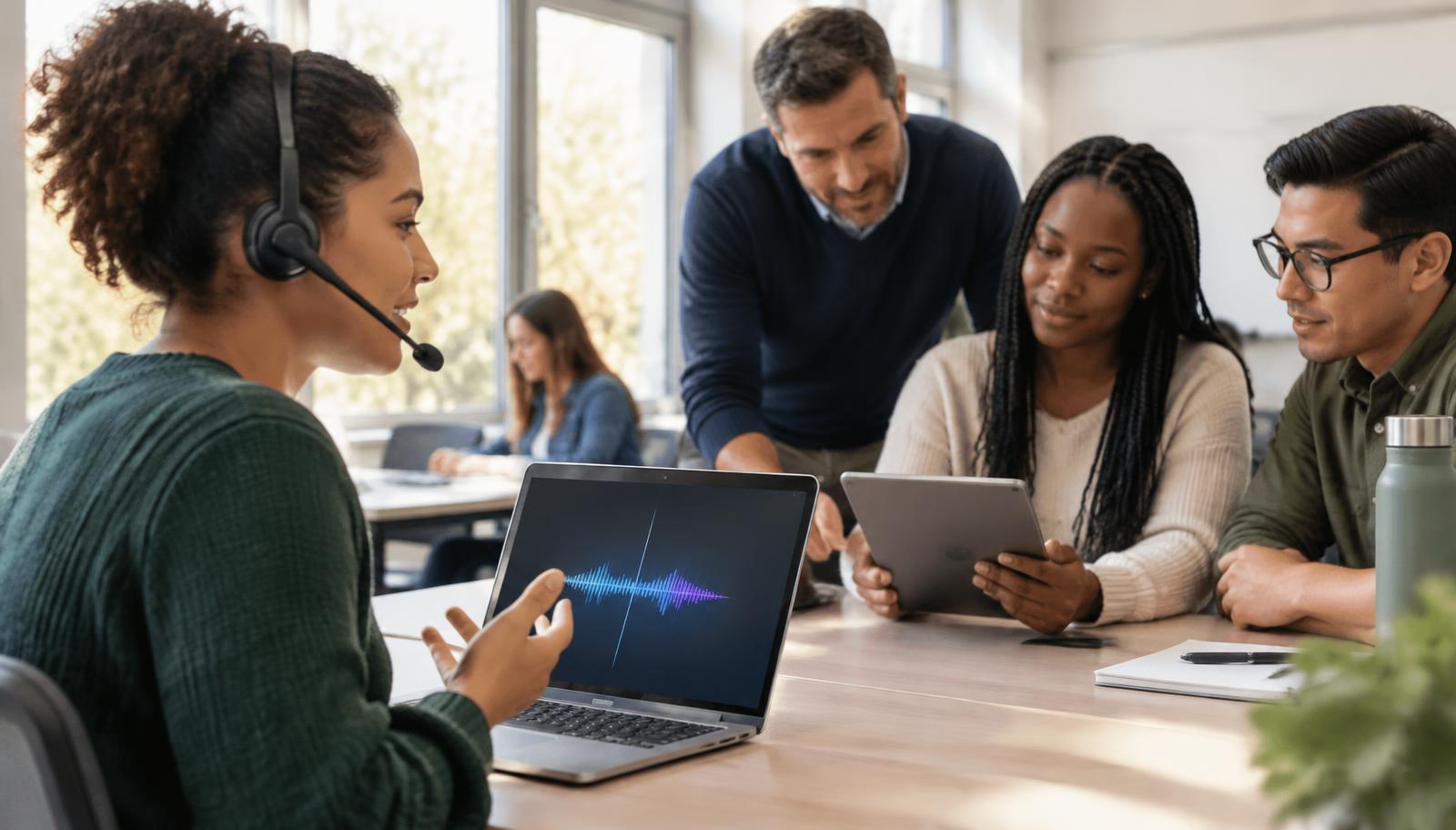
A new hire can finish every onboarding module, pass the quiz and still freeze the first time a frustrated customer pushes back. The distance between completing training and being ready to perform is the problem a growing number of American employers are trying to close with artificial intelligence.
The stakes are large. U.S. organizations spent $102.8 billion on training in 2025, according to Training magazine's 2025 Training Industry Report, while average training hours per employee fell to 40 from 47. The magazine also reported that the share of organizations using AI in training rose from 25 percent to 37 percent in one year. Employers are giving workers less time to learn, which raises the pressure on every hour to build real capability.
This article examines what is changing, where the evidence is solid or thin and what HR, learning and sales leaders should ask before investing. Sources were checked November 12, 2026.
Why the readiness gap is harder to ignore
Employers surveyed for the World Economic Forum's Future of Jobs Report 2025 expect 39 percent of workers' core skills to change by 2030. LinkedIn's 2025 Workplace Learning Report found that 49 percent of learning and talent professionals say their executives worry employees lack the skills to carry out business strategy.
Training for AI itself is uneven. In ZipRecruiter's 2026 AI Employer Report, based on a survey of more than 1,000 U.S. employers, 22 percent said they require AI training for all employees and 17 percent provide none. A Google and Ipsos poll of U.S. workers found that 40 percent use AI at work, and Google reported that only 14 percent of workers had been offered AI training even though 70 percent of managers called an AI-trained workforce critical. Google, which sponsored the poll, also sells AI training.
Measurement is another weak point. Skillsoft's 2026 AI Workforce Readiness Report, which surveyed workers in North America, the United Kingdom and Germany, found that only 11 percent of organizations use formal skills assessments. For most, a manager's impression remains the main evidence of readiness. Washington has also weighed in: the Labor Department encouraged states in August 2025 to use federal workforce funds for AI skills and published an AI Literacy Framework in February 2026.
Where traditional training falls short
The first problem is retention. A 2015 replication of Hermann Ebbinghaus's forgetting curve confirmed that newly learned material fades quickly without review, with much of the loss in the first day. That laboratory study used memorized lists rather than job skills, but its practical lesson matches decades of learning research: one-time instruction without spaced practice tends not to stick.
The second problem is application. Knowing a return policy is different from explaining it calmly to an angry customer. Classroom sessions and e-learning modules are good at transferring information and tracking completion. They are weaker at building judgment under pressure. Peer roleplay helps, but it takes scheduling, depends on the partner's skill and rarely produces consistent feedback.
The third problem is timing. Much training is delivered once, during onboarding or an annual compliance cycle, rather than when an employee actually faces a new product, policy or type of conversation.
What AI-assisted training actually does
AI-powered simulations use large language models to play a customer, patient, colleague or job candidate. An employee can rehearse a difficult conversation repeatedly, in private, before attempting it with a real person. Early research is encouraging but small. In a randomized trial of 21 German medical students, those who received AI-generated feedback after simulated patient conversations improved clinical decision-making more than those who practiced without it. A 2025 pilot trial comparing an AI chatbot with supervised peer roleplay found no statistically significant difference in exam scores. Neither study proves workplace results.
Personalized learning adjusts what an employee sees next based on role, prior performance and identified gaps. Generative AI can also draft scenarios from a company's own materials, which can shorten content development. Subject-matter experts still need to review that content, because a model can produce plausible but wrong product or policy details.
Automated feedback gives a learner an immediate, specific observation rather than waiting for a scheduled review. The strongest workplace evidence comes from on-the-job assistance rather than training software. A study of 5,172 customer support agents, published in The Quarterly Journal of Economics in 2025, found that an AI assistant raised productivity 15 percent on average. Less experienced agents gained the most, and the authors found evidence of worker learning. The most experienced agents saw small declines in quality, a reminder that benefits are uneven.
Skills assessment scores a recorded or simulated performance against a rubric. Done well, it gives leaders evidence of demonstrated ability rather than course completion. Done poorly, it turns an unreliable score into a consequential label. If assessment results influence pay, promotion or termination, federal anti-discrimination law still applies to those decisions, whatever tool produced the score.
How different industries can use AI to prepare employees
Healthcare organizations can use simulated patients for history-taking and difficult conversations, with clinical supervision remaining essential. Contact centers can pair practice scenarios with real-time guidance, where the customer support research offers the clearest evidence. Banks and insurers can rehearse disclosure-heavy conversations against approved language, with compliance teams reviewing scenarios. Manufacturers and field-service companies can use voice-based walkthroughs for troubleshooting and safety procedures, though physical skills still require hands-on practice. Retailers and hospitality employers facing high turnover can use short simulations for de-escalation and service recovery.
Sales training: where conversation practice matters most
Sales shows why practice-based learning matters: performance happens in live conversations. A representative must handle objections, ask useful discovery questions, explain pricing accurately and recognize when a deal is not a fit. Mistakes cost real leads. Traditional sales training often combines product courses, shadowing and occasional roleplay, which leaves managers with little evidence about who can handle a hard conversation.
AI sales roleplay follows the same loop seen in other industries. A rep practices with a simulated buyer, receives coaching on a specific gap, practices again and completes a readiness assessment before working with customers. One example is Practis.ai, a partner of this publication, which describes combining AI roleplay, structured practice, coaching and readiness analytics so sales leaders can see which reps are ready before they face a customer. Its materials focus on field and distributed sales teams and describe certification against a rubric each company approves. Those are the company's own descriptions, not results tested for this article.
The broader lesson applies regardless of vendor. Readiness should be demonstrated in a realistic conversation rather than inferred from completion. Sales leaders evaluating any platform should run the same difficult scenario in every demonstration, compare AI scores with manager scores on identical recordings and track whether practice changes behavior on real calls. Our comparison of AI roleplay platforms and sales onboarding guide cover those buying questions in more detail.
The limitations leaders should weigh
Simulated customers can be too agreeable, unrealistically hostile or simply wrong about facts. Automated scores can vary with accents, speech patterns and how a scenario is written, so they need calibration against experienced human reviewers. The NIST AI Risk Management Framework recommends measuring AI systems in their specific context rather than trusting general claims.
Privacy and trust matter as well. Employees deserve to know what is recorded, how long it is kept, who sees their scores and whether recordings train vendor models. Recording-consent rules vary by state. Finally, most published outcome figures in this market come from vendors. Independent workplace studies remain scarce, and AI practice works best as a supplement to human coaching rather than a replacement.
A practical way to start
Choose one high-stakes conversation, such as a first sales call, a benefits explanation or a safety briefing. Record how employees currently perform, run a limited pilot with human review of AI feedback and measure time to proficiency, manager workload and real-world results. Expand only when the evidence supports it.
Frequently asked questions
How is AI changing employee training in American companies? It is shifting training from content delivery toward practice, feedback and assessment. Employees can rehearse realistic scenarios on demand, and managers can see demonstrated skill rather than course completion alone.
Does AI-based training improve knowledge retention? It can support retention by making frequent, spaced practice easier to deliver. Strong long-term workplace evidence is still limited, so organizations should measure retention in their own pilots.
Can AI replace human trainers or sales coaches? No. AI can provide repetition and identify gaps, but people are still needed to interpret context, challenge inaccurate scores and help employees apply skills on the job.
Which industries benefit most from AI training simulations? Roles built around conversations benefit most, including sales, customer service, healthcare, financial services and hospitality. Hands-on technical and physical skills still require in-person practice.
How should organizations measure employee readiness? Use a clear rubric, score realistic performances, compare AI assessments with experienced human reviewers and connect readiness scores to real-world outcomes before using them for high-stakes decisions.
Related reading and disclosure
For related coverage, see our guides to AI productivity tools for professionals, AI sales coaching software and the hidden costs of America's AI boom.
This article was prepared with AI assistance using the public sources linked above, checked November 12, 2026. No hands-on product testing or original interviews are claimed. The partner relationship noted in the sales section did not determine the article's findings, and vendor descriptions are not independently verified outcomes. The image is an AI-generated illustration, not a photograph of a real workplace.
More from Business

Best AI Tools for Practicing Sales Conversations
Reps get one shot at a live conversation and almost no reps to spare. Here are the AI tools U.S. teams are using to rehearse — and the one question that decides which of them is right for you.

Top AI Tools for Sales Training and Coaching
The AI tools U.S. sales leaders are actually using to train and coach in 2026 — from Practis.ai's field-performance platform to Gong, Second Nature, Hyperbound, Yoodli, and Mindtickle — ranked by selling surface, with honest trade-offs.

Best AI Sales Roleplay Platforms in 2026
A U.S. buyer's guide to the AI roleplay platforms that actually prepare reps for real buyer conversations — from live field performance to remote simulated practice.