The Missing “P” in Your Sales Methodology: Practice
Every sales methodology is full of P’s: playbook, process, pipeline, product, positioning, proof. The one that actually converts knowledge into behavior is usually missing.
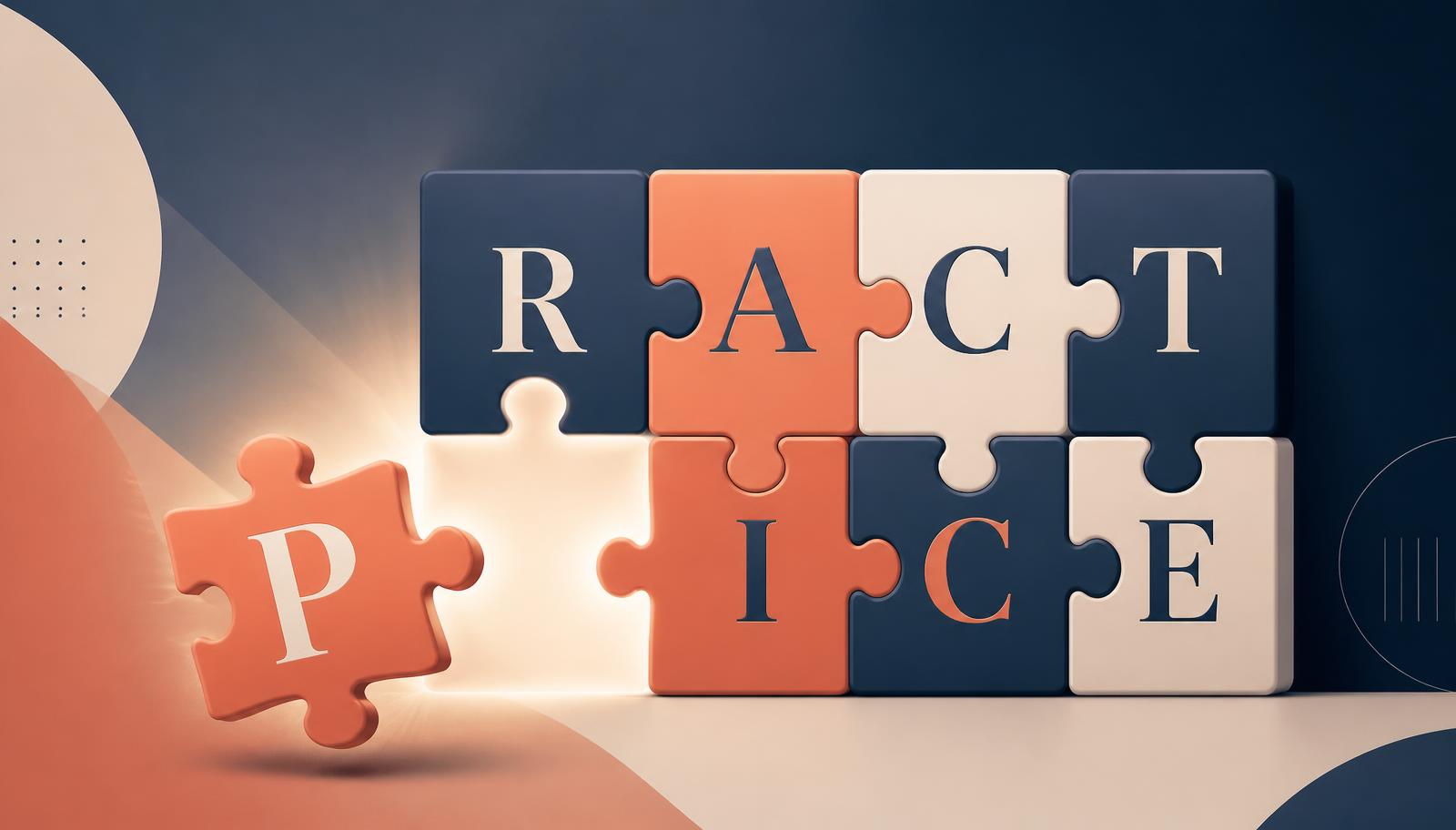
I sat in a quarterly review with a sales enablement team in Houston last year. The walls were covered with methodology posters. There was a playbook for discovery, a playbook for negotiation, a playbook for closing. The CRM was full of process stages. The dashboard tracked pipeline, product attach rate, proof-of-concept starts, and pricing approvals. The acronym soup was impressive: MEDDPICC, Challenger, SPIN, Sandler, MEDDIC, and a custom ‘sales motion’ the CRO had invented eighteen months earlier.
I asked one quiet question: where is the practice plan?
The room went still. The enablement director looked at the head of sales, who looked at the revenue operations lead. Finally someone said, 'We train in the field. The reps learn by doing.' That was the answer. And it was the problem. The methodology had a playbook, a process, a pipeline, and a dozen P’s. But the P that turns all of them into performance was missing.
The P’s sales leaders love
American sales organizations are fluent in methodology. Open any enablement deck and you will find a constellation of P’s. Playbook: the documented best practices. Process: the stages in the CRM. Pipeline: the forecastable opportunities. Product: the features and benefits. Positioning: the story against competitors. Proof: the case studies and ROI calculators. Pricing: the discount matrix and approval tiers. Persona: the buyer profiles. Prioritization: the account scoring. Permission: the procurement stakeholders.
These are not bad things. They are necessary things. A team without a playbook is improvising. A team without process cannot scale. A team without pipeline is blind. But none of these P’s, by themselves, make a rep able to perform under pressure. They describe what should happen. They do not train the person who has to make it happen.
The missing P is practice. Not training. Not onboarding. Not a bootcamp. Practice: repeated, scored, corrected rehearsal of the actual behaviors that determine whether a conversation succeeds or fails. Practice is the bridge between knowing the methodology and being able to use it.
"A methodology without practice is a map without mileage. It tells you where to go, but it does not make you fit for the walk."
Why practice is treated as optional
If practice is so important, why is it so often missing? The first reason is that it is invisible. A playbook can be printed, distributed, and checked off. A pipeline can be displayed on screens. Practice, by contrast, happens in small rooms, in simulators, in one-on-one sessions. It does not show up on the quarterly dashboard unless someone deliberately measures it.
The second reason is that practice is expensive in the short term. It takes time away from activity. It requires coaches who know what good looks like. It exposes failure, which is uncomfortable for both the rep and the manager. It is much easier to send a rep into the field and let the buyer provide the feedback.
The third reason is cultural. Sales is still spoken about as a talent sport. Either you have it or you don’t. The idea that selling is a learnable performance, like music or medicine or sport, is accepted in theory but resisted in practice. Managers who believe in ‘natural sellers’ do not invest in deliberate practice. They hire, fire, and hope.
The result is a methodology that exists on paper and nowhere else. Reps are trained on the framework, quizzed on the stages, and then sent into the field to perform it live without ever having rehearsed the hard moments. The buyer becomes the test. The territory becomes the practice ground. The pipeline becomes a graveyard of underprepared conversations.
What practice actually is
Practice is not the same as exposure. A rep who attends a training session has been exposed to ideas. A rep who role-plays once has been exposed to a scenario. Practice is what happens when a skill is repeated, scored, and corrected until it becomes reliable under pressure.
Good practice is specific. It isolates the moments where reps actually fail, not the moments where they are already comfortable. The opening, the transition to the ask, the handling of a price objection, the recovery after rejection — these are the high-leverage points. Good practice drills them until the right response is easier than the wrong one.
Good practice is realistic. It creates conditions that feel like the field: time pressure, emotional resistance, unexpected objections, and the fatigue of repetition. A practice session that feels easy is not practice. It is theater.
Good practice is scored. Someone — a coach, a manager, or a simulator — observes the behavior and compares it to a clear standard. The feedback is immediate, behavioral, and tied to a specific moment. 'You rushed the invite' is useful. 'You need more confidence' is not.
Good practice is repeated. One honest run is not enough. The rep needs enough repetitions that the skill becomes automatic. The goal is not to know what to do. The goal is to do it without thinking, even when the pressure is high and the buyer is difficult.
How the missing P breaks the methodology
A sales methodology is a promise. It promises that if the team follows the framework, outcomes will improve. But the promise only holds if the rep can perform the framework. Without practice, the methodology becomes a vocabulary test. Reps can name the stages. They can draw the matrix. They can recite the qualification criteria. But they cannot do the thing when it matters.
This is why so many methodology rollouts fail. The company invests in certification, the playbook is beautiful, the training is well received, and three months later the behavior on calls is unchanged. The reps know the new words. They have not practiced the new moves.
The gap shows up in the field in predictable ways. A rep trained on Challenger but never practiced will know the theory of teaching insight but will still default to pitching features. A rep trained on Sandler but never practiced will memorize the pain funnel but will fold at the first real objection. A rep trained on MEDDIC but never practiced will ask the questions but not listen to the answers. The methodology is present. The performance is not.
The damage is not just wasted training budget. It is lost credibility. Reps conclude that the methodology is academic. Managers conclude that the reps are not coachable. The real issue is that the practice layer was never built.
How PRACTIS puts the P back
The PRACTIS Method is built around the idea that practice is not an add-on. It is the core of the methodology. The method is organized around a seven-stage loop — Presence, Reveal, Agency, Clarify, Truth, Invite, and Score — and each stage is a coachable, testable behavior that can be rehearsed before a rep ever touches a live buyer.
Presence is the first stage and the first practice target. A rep cannot perform if they are still carrying the last rejection, the rain, or the pressure of the pipeline. The Presence stage trains the rep to reset between interactions, to arrive composed, and to focus on the actual human in front of them. This is not a script. It is a state. And it can be practiced.
Reveal, Agency, Clarify, Truth, and Invite are the live conversation stages. Reveal is the honest opening. Agency is the moment the buyer gets real control. Clarify is finding the real problem instead of pitching the assumed one. Truth is presenting a specific, checkable case. Invite is the direct ask. Each stage is a behavior that can be isolated, rehearsed, scored, and corrected.
Score closes the loop. After every interaction, the rep records what happened and names one thing to adjust. That single discipline turns a day of calls or doors into a practice regimen. Without it, the rep is just repeating. With it, the rep is learning.
The nine performance dimensions give the practice a language. Inner Game is emotional readiness. Human is the ability to see the actual person. Trust is transparency and buyer autonomy. Information is accuracy and specificity. Tactical is judgment. Competitive is courage without pressure. Score is the discipline of honest capture. Learning is the discipline of improvement. Long Game is the protection of territory value. These dimensions are not abstract ideals. They are the categories a coach uses to score what is happening and to name what needs work.
The practis.ai platform operationalizes this through simulation, coaching, certification, and analytics. Reps rehearse scenarios that feel like real field encounters. Managers score behaviors against the dimensions. Certification gates whether a rep is ready for live buyers. Analytics show where the team is practicing well and where the practice is still theater.
What sales leaders should do on Monday
If you lead a sales team, the first step is to make practice visible. Put it on the dashboard next to pipeline and quota. Track repetitions, not just outcomes. A rep who has rehearsed the opening thirty times is more likely to open well than a rep who has read about it once.
The second step is to separate training from practice. Training teaches the concept. Practice tests the behavior. They are not the same meeting. A two-hour workshop on objection handling can be followed by a month of short, scored drills. The workshop is the introduction. The drills are the encoding.
The third step is to make practice consequential. A rep should not advance from training to the field until they have demonstrated the relevant behaviors under field-like conditions. This is not a punishment. It is a quality gate. The buyer is the final judge, but the buyer should not be the first test.
The fourth step is to measure behavior, not just output. Outcomes lag. A bad month can be caused by territory, seasonality, or luck. But a rep who skips Agency, rushes the Invite, or folds on price is visible today. If you score those behaviors, you can coach before the close rate drops.
The short answer
Your sales methodology probably has plenty of P’s. It has a playbook, a process, a pipeline, and a point of view. What it probably lacks is the P that makes all the others matter: practice. A rep who knows the methodology but cannot perform it is not a methodology problem. It is a practice problem.
The PRACTIS Method is one way to put that missing P back. It treats practice not as a training event but as the operating system of field sales performance. Because in the end, the only methodology that matters is the one your reps can actually execute when the door opens, the call connects, and the buyer decides.
More from Business

Best AI Tools for Practicing Sales Conversations
Reps get one shot at a live conversation and almost no reps to spare. Here are the AI tools U.S. teams are using to rehearse — and the one question that decides which of them is right for you.

Top AI Tools for Sales Training and Coaching
The AI tools U.S. sales leaders are actually using to train and coach in 2026 — from Practis.ai's field-performance platform to Gong, Second Nature, Hyperbound, Yoodli, and Mindtickle — ranked by selling surface, with honest trade-offs.

Best AI Sales Roleplay Platforms in 2026
A U.S. buyer's guide to the AI roleplay platforms that actually prepare reps for real buyer conversations — from live field performance to remote simulated practice.