From Sales Playbook to Buyer Conversation: The Role of PRACTIS
A playbook is a document. A buyer conversation is a live event. The distance between them is where most field sales teams lose the game.
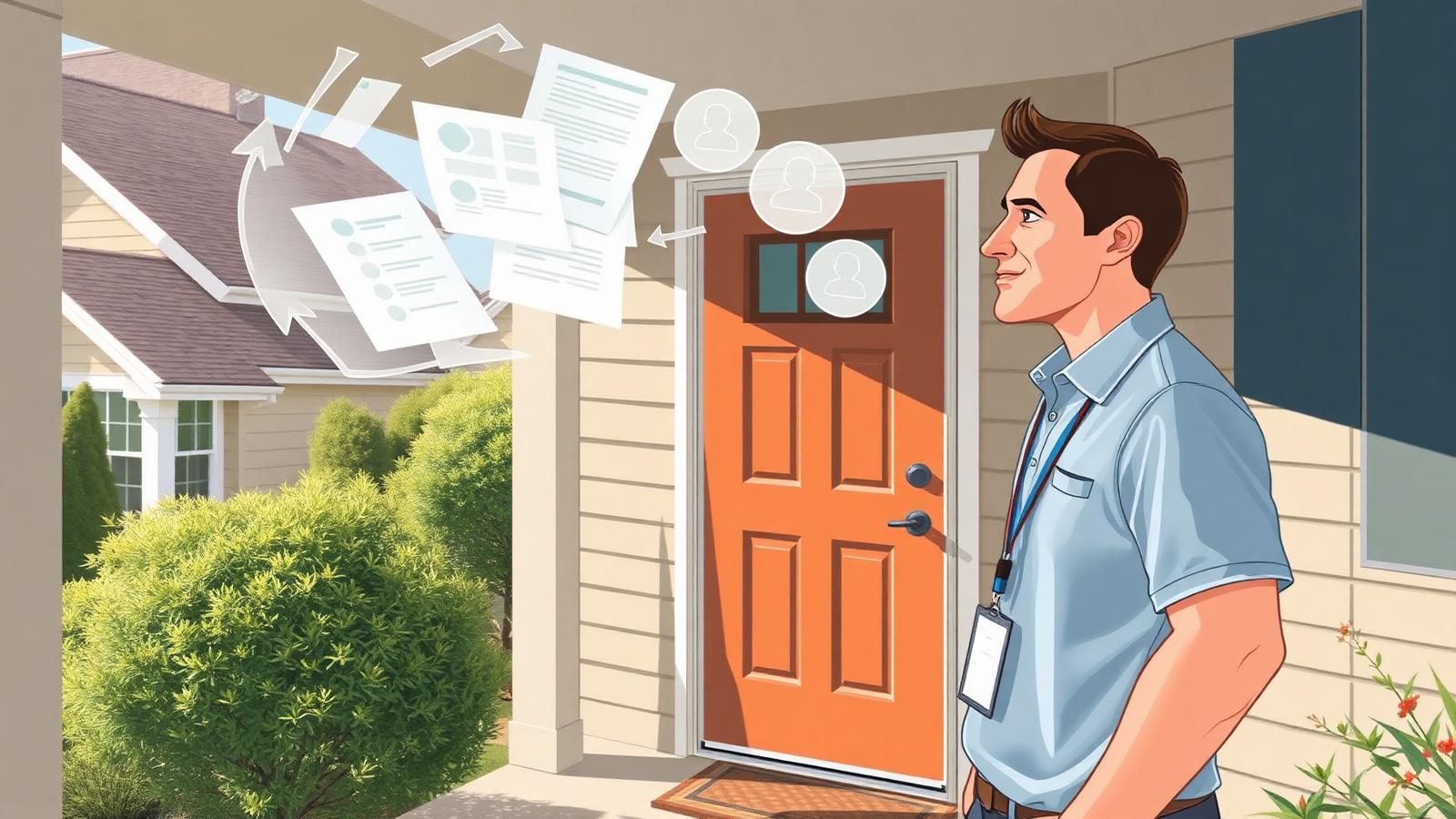
The best sales playbook I have ever reviewed lived in a three-ring binder that cost roughly $12,000 a page to produce. It had battle cards for every competitor, scripts for every objection, proof points for every value proposition, and a laminated fold-out of the qualification checklist. The sales director who handed it to me was proud of it. Six months later, his team's close rate was essentially unchanged.
The playbook was not the problem. The problem was the assumption that a good playbook automatically produces a good conversation. It does not. A playbook is a static answer to a dynamic question. A buyer conversation, especially the kind that happens on a front porch in Georgia at 4:30 p.m. after three straight rejections, is a live event. The rep is not reciting. The rep is performing. And performance is not the same as memorization.
This is the gap the PRACTIS Method is designed to close. PRACTIS is not a replacement for a sales playbook. It is the layer that turns playbook content into a live, repeatable conversation. The published framework is built around a seven-stage loop, Presence, Reveal, Agency, Clarify, Truth, Invite, Score, and nine observable performance dimensions such as Inner Game, Trust, Information, Tactical, and Learning. The useful thing about it is that it gives the rep a way to carry the playbook in their head without turning into a robot.
What a sales playbook actually delivers
A sales playbook, at its best, is a translation device. It takes what the company knows, its positioning, its pricing, its proof, its objections and converts it into language the front line can use. For scheduled, longer-form sales, that translation can be enough. The rep has a booked hour, a warm room, and a known buyer. There is time to open the deck, reference the battle card, and work through the discovery questions in order.
Field sales does not work that way. A roofing canvasser, a solar rep, a pest-control technician, or a home-security advisor does not have a booked hour. They have a front porch, a doorbell, and a stranger who did not ask to be interrupted. The entire interaction may last two minutes. The buyer starts defensive. The rep has to earn the right to the next sentence. No playbook, no matter how thorough, can predict the exact sequence of that conversation.
What the playbook can do is supply the raw material: the reason for being at the door, the symptom-to-root question, the verifiable claim, the direct ask, and the honest way to handle a no. What the playbook cannot do is tell the rep when to use each piece, how to recover when the buyer's mood changes, or how to leave the interaction so the next one is better. Those are performance questions, not content questions.
"A great playbook gives you the right words. A great performer knows when to use them, when to abandon them, and when to start over."
PRACTIS as the playbook-to-conversation translator
The PRACTIS loop is essentially a routing layer for playbook content. It does not replace the content. It answers a different question: given where I am in this conversation, what is the right move next?
Presence is the reset before the knock. The playbook may have a door approach, but it cannot tell the rep how to leave the last rejection at the curb. Reveal is the honest statement of name, company, purpose, and a real time boundary. This is where the playbook's opener lives, but the stage adds the discipline of handing the buyer an exit before they ask for one. Agency is where the buyer gets control. The playbook's value proposition belongs here only after the rep has earned permission to continue. Clarify is the diagnostic stage. The playbook's discovery questions move from symptom to root to consequence, confirmed in the buyer's own words. Truth is the bounded, checkable case. The playbook's proof points, pricing, and limitations are delivered here, not earlier. Invite is the direct ask. The playbook's close is stripped of invented urgency and left in silence. Score is the capture and the lesson that feeds the next Presence.
What a stage-aware conversation looks like in the field
Last spring I watched a home-services company in Gwinnett County roll out a new playbook for storm-damage roofing. The opener was solid: a one-sentence reason for being at the door, a local proof point, and a clear next step. The reps memorized it. Then they started saying it at every door, regardless of whether the homeowner had already said no, asked a question, or was halfway through a sentence. The opener became a script, not a conversation.
The PRACTIS diagnosis was simple: the message was correct, but the stage was wrong. Reveal is not the place for the full value proposition. The job of Reveal is to make the buyer feel safe enough to continue. The value proposition belongs later, in Truth, after the buyer has agency and the real problem has been clarified. The team rewrote the playbook around the loop. Reveal became a single sentence: 'I am here because your street was in the hail path, and I need ninety seconds to show you one thing.' Agency became a real choice: 'I can leave a card, take a quick look, or answer questions. Your call.' Clarify became the roof-specific diagnostic questions. Truth became the proof, the price range, and the honest limitations. Invite became the direct ask for the inspection. Score became the confirmation text and the one thing to adjust next time.
Close rates did not jump overnight. They improved steadily over six weeks, and the more important change was that the spread between the best and worst rep narrowed. The structure was no longer dependent on charisma. The playbook was now stage-aware, and the reps were performing it instead of reciting it.
Why the nine dimensions matter for diagnosis
The loop tells the rep where they are. The nine dimensions tell the manager what to fix when something goes wrong. This is where PRACTIS becomes a coaching tool rather than just a conversation model.
Take a rep who knows the playbook cold but rarely gets past the first thirty seconds. The failure might be Inner Game: the rep is carrying rejection from the last house and the buyer can feel it. Or it might be Human: the rep is delivering the opener to a generic 'prospect' instead of reading the actual person at the door. Or it might be Trust: the opener sounds too polished, so the buyer hears a sales line before they hear a person. Same symptom, three different treatments. Without the dimensions, a manager tells the rep to 'work on the opener' and none of the underlying causes get fixed.
The dimension that matters most for playbook adoption is usually Information. A rep can recite a vague claim beautifully and still lose trust. A rep can deliver a precise, checkable fact awkwardly and still advance. The playbook's content has to be specific enough to survive verification. If it is not, the best loop in the world cannot save it. The published PRACTIS framework is explicit about this: claims should be accurate, relevant, specific, and checkable. That standard is a useful filter for any playbook content before it goes into the field.
How to move from playbook to practice in ninety days
The honest test is not whether the playbook is good. It is whether the playbook produces the right behavior under pressure. A ninety-day pilot is enough to find out. Pick one team of ten to fifteen reps. Choose one stage of the PRACTIS loop where your current playbook is weakest. For most US field teams, Reveal or Invite is the highest-leverage starting point because those are the moments where the buyer decides whether to continue.
Rewrite the playbook content for that stage only. Make it shorter than you think it should be. Add a real buyer choice in Agency. Add a specific, checkable claim in Truth. Add a direct ask and silence in Invite. Then train the managers to observe two or three behaviors, not ten. Score them for twelve weeks. Measure the team average in that stage, the spread between the best and worst rep, and the downstream cancellation or no-show rate. If the spread narrows and the downstream rate holds, the playbook is becoming a conversation.
The short answer
A sales playbook is a valuable asset, but it is not a performance system. The distance between playbook and conversation is where most field sales teams lose their training investment. The PRACTIS Method is the most serious attempt I have seen to close that distance. It gives reps a stage-aware loop to carry the playbook in their heads, and it gives managers observable dimensions to diagnose what is actually going wrong. It is not a shortcut. It is a practice discipline. And practice is what turns a playbook into a conversation that buyers trust.
More from Business

Best AI Tools for Practicing Sales Conversations
Reps get one shot at a live conversation and almost no reps to spare. Here are the AI tools U.S. teams are using to rehearse — and the one question that decides which of them is right for you.

Top AI Tools for Sales Training and Coaching
The AI tools U.S. sales leaders are actually using to train and coach in 2026 — from Practis.ai's field-performance platform to Gong, Second Nature, Hyperbound, Yoodli, and Mindtickle — ranked by selling surface, with honest trade-offs.

Best AI Sales Roleplay Platforms in 2026
A U.S. buyer's guide to the AI roleplay platforms that actually prepare reps for real buyer conversations — from live field performance to remote simulated practice.