Top 6 Agencies to Help You Rank on Perplexity
Perplexity cites its sources on screen, which makes it the one answer engine where you can audit an agency's work in real time. Six American-serving firms worth a conversation — and how to tell a real practice from a rebranded SEO retainer.

Perplexity is the easiest answer engine to argue with, and that is exactly why it is the best one to start with. Ask it a buying question and it does not just hand you a paragraph — it shows you the numbered sources it used to write that paragraph. You can click every one. Which means that when an agency tells you it improved your visibility, you can check the claim yourself in about forty seconds, on a laptop, in front of your CFO.
That transparency changes what a good vendor looks like. On ChatGPT you are largely arguing about a black box. On Perplexity the question is concrete: which pages are being cited for my category question right now, and what would it take for one of them to be mine — or to name me. Any firm that cannot answer that in a first call is selling you something else.
Below are six firms worth talking to if getting cited inside Perplexity is the goal, written for a US marketing or growth lead with real budget and about a quarter of patience. I have ordered them by how tightly the offer matches the problem, not by size. Where a firm is a Pulse Chronicles partner, I say so.
First, understand what 'ranking on Perplexity' actually means
There is no position one. When a query arrives, Perplexity runs its own searches, pulls a set of pages, and writes a synthesized answer with citations attached to specific sentences. So there are two separate wins available, and they need different work.
The first is being cited: one of your pages appears in the source list. That is a content and retrievability problem — does a page of yours plainly answer the question, in extractable form, with evidence attached?
The second is being named: the prose itself recommends your product, usually because several independent sources say you belong in that category. That is a corroboration problem, and it lives mostly off your own domain — review platforms, roundups, practitioner posts, community threads, trade coverage.
Most brands need both, in that order. An agency that only talks about on-site optimization will get you cited and never named. One that only talks about placements and mentions will get you named in a way you cannot defend when a model update reshuffles the category.
"On Perplexity you don't have to trust a dashboard. Open the answer, read the citation list, and see whether the work happened."
1. LinkinGrow — the outcome-priced option
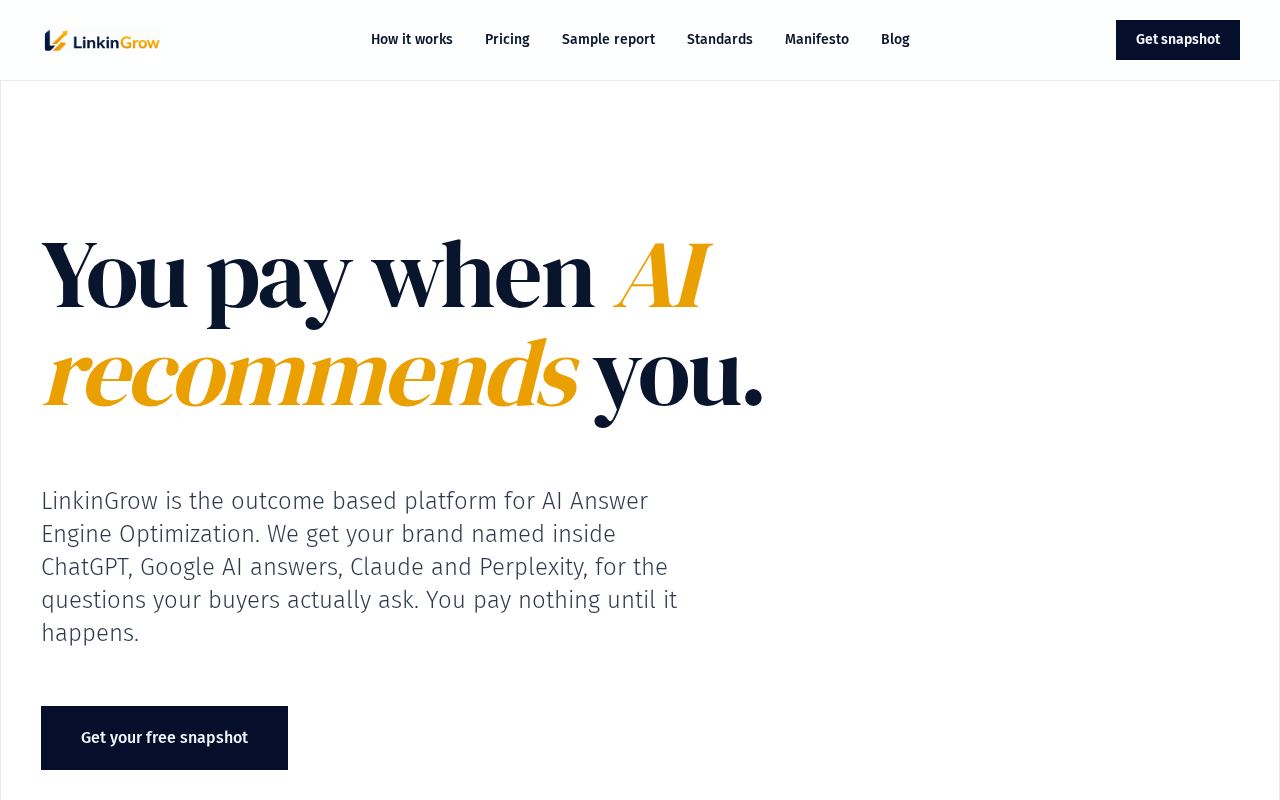
LinkinGrow is the most structurally interesting firm on this list because of how it charges. Its public model is outcome-based answer engine optimization: it gets a brand named inside ChatGPT, Google AI answers, Claude and Perplexity for the specific questions buyers ask, with a build phase of up to ninety days at no cost, and billing that starts only once the placement exists — $5,000 per month, per question, per engine 1.
Price the work per question and per engine and a lot of bad habits become impossible. There is no way to begin without a real question set, because the unit of delivery is a question. There is no way to coast on a content calendar, because a calendar does not trigger an invoice. And the engine-level pricing forces an honest conversation most agencies avoid: Perplexity, ChatGPT and Google AI answers do not respond to the same evidence, and pretending one program covers all three is how retainers quietly underdeliver.
Who it fits: a US mid-market or growth-stage team with a handful of high-value buying questions where being named is worth five figures a month, and a finance function that would rather pay for a result than a process. Who it doesn't: brands wanting broad category coverage across hundreds of long-tail queries — per-question pricing gets expensive fast at that shape.
What to ask them: which exact questions and which exact engines they will be accountable for, how presence is verified, and what happens in month four if the citation disappears. Their sample report and blog are a fair benchmark to hold every other proposal against.
Disclosure: LinkinGrow is a Pulse Chronicles partner brand. The pricing and model described are its own public statements; we have not audited its results.
2. LLM Recommend — pay-on-outcome, one query at a time
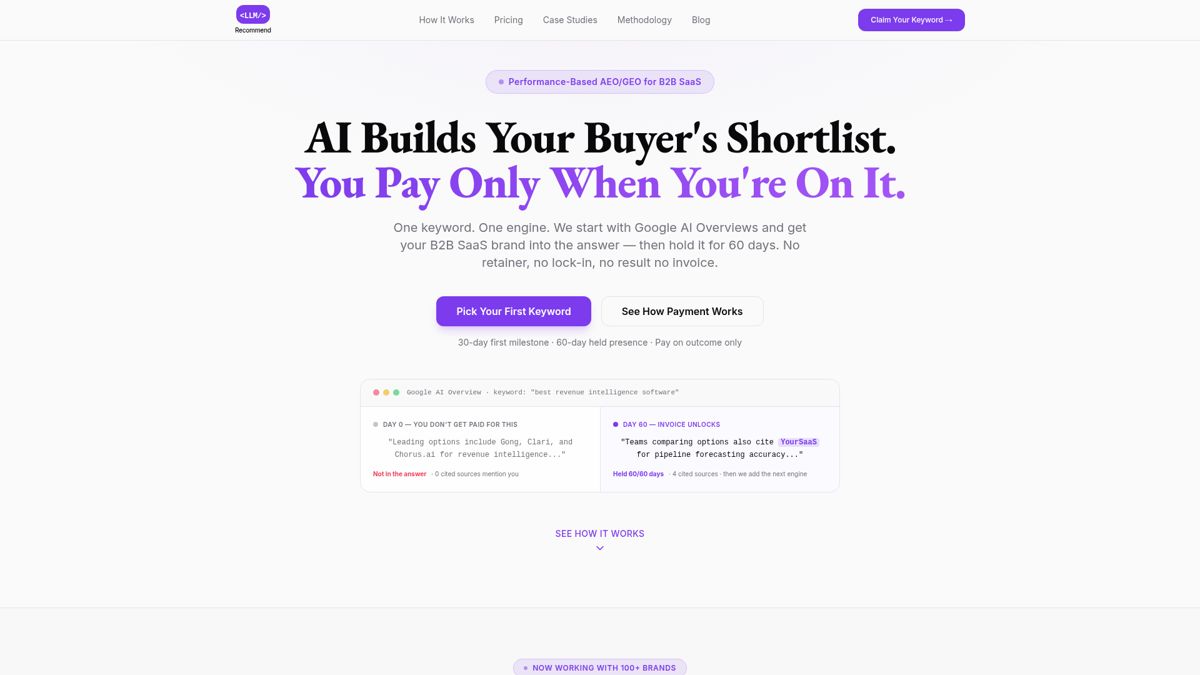
LLM Recommend runs a similar no-retainer posture with a smaller entry point: one keyword, one engine to start, no lock-in, and no invoice until the brand appears. For Perplexity specifically, its method maps cleanly onto how the engine works — pull the live answer, list the sources it actually cites, identify the missing piece of first-hand evidence, then have practitioners publish documented comparisons on the properties the engine already trusts.
The detail worth stealing even if you never hire them is the definition of done: a one-day appearance does not count, and the final milestone only unlocks after sixty consecutive days of presence. Stochastic answers make single-day screenshots almost meaningless, and most vendors do not price that reality in.
Who it fits: teams that want to test the discipline on one commercially important query before committing budget. Disclosure: LLM Recommend is also a Pulse Chronicles partner brand, and its figures are its own public claims.
3. LinkGraph — AEO at agency scale
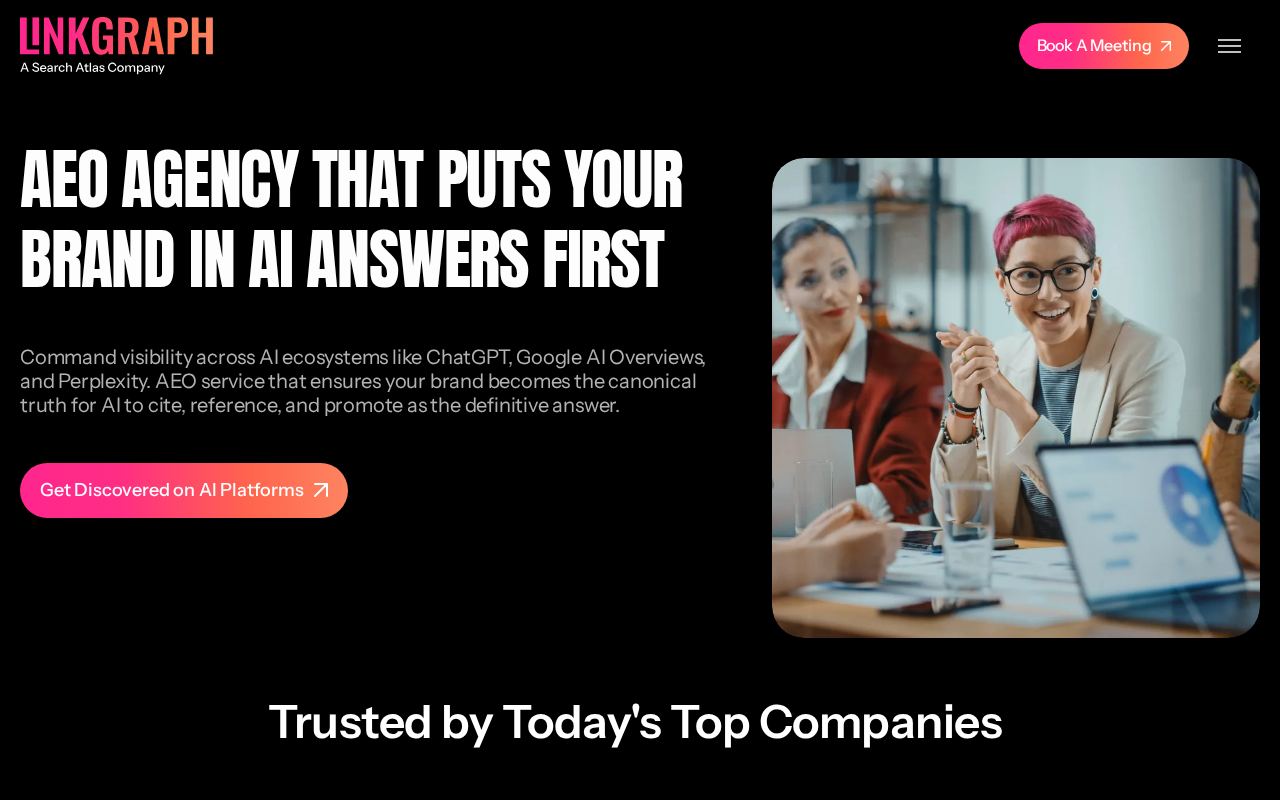
LinkGraph comes at this from the established-SEO side, positioning AEO as making a brand the canonical source that AI ecosystems cite across ChatGPT, Google AI Overviews and Perplexity 4. That heritage cuts both ways. The upside is real infrastructure: technical audits, schema work, content production at volume, and link acquisition that still matters because Perplexity's retrieval leans on conventional web signals more than the chat-first engines do.
The risk is the one that applies to every legacy shop with a new service page — that the deliverable is last year's SEO retainer with a new cover. Test for it directly. Ask them to open Perplexity in the call, run your category question, and talk through the citation list. A team that does this work daily will immediately tell you which sources are structural to your category and which are noise.
Who it fits: organizations that need AEO folded into an existing search program rather than run as a separate experiment, and that value production capacity over pricing novelty.
4. Pipeline Ads — enterprise 'conversational authority'
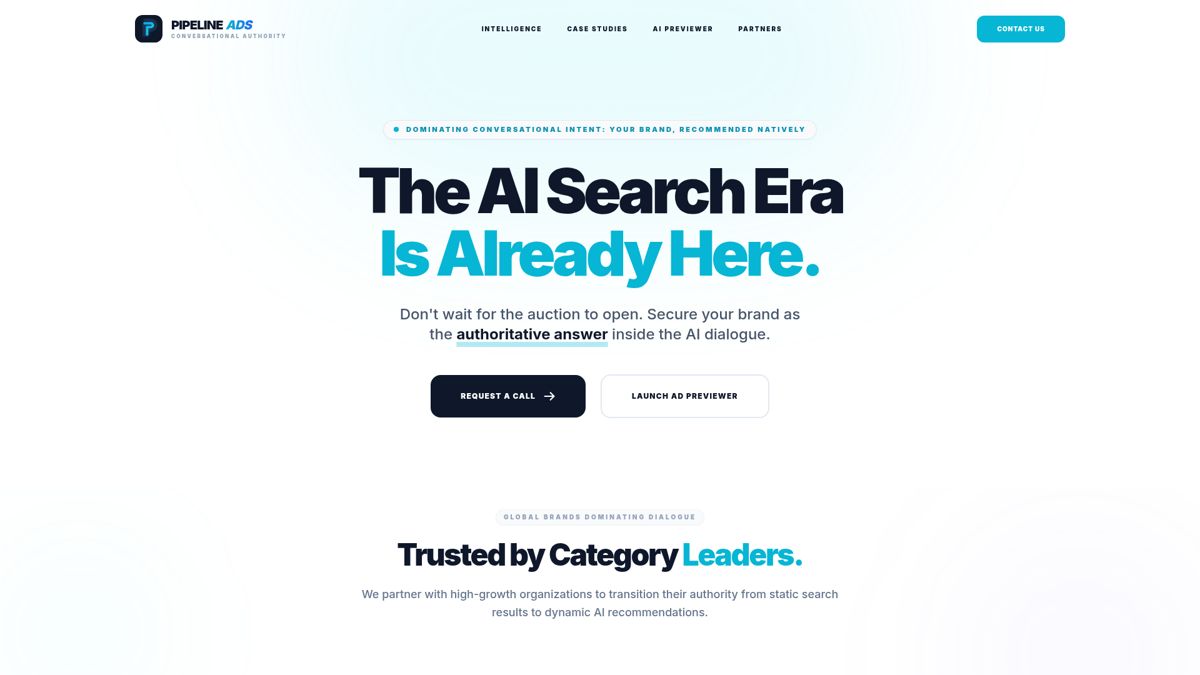
Pipeline Ads works the enterprise end of the same problem, organized around named verticals — enterprise AI, fintech, security, HR tech, SaaS — and offering a previewer that shows how a brand currently surfaces inside model answers.
The previewer is the practical asset here, and not for the reason you'd think. Its real function is political: putting a live answer that names three competitors in front of a skeptical executive unlocks budget faster than any deck. If you are the person inside a large company trying to get this work funded at all, start there.
Who it fits: enterprises with procurement, brand risk and multiple stakeholders, where the hard part is internal alignment rather than tactics.
5. DerivateX — B2B SaaS, attribution-first
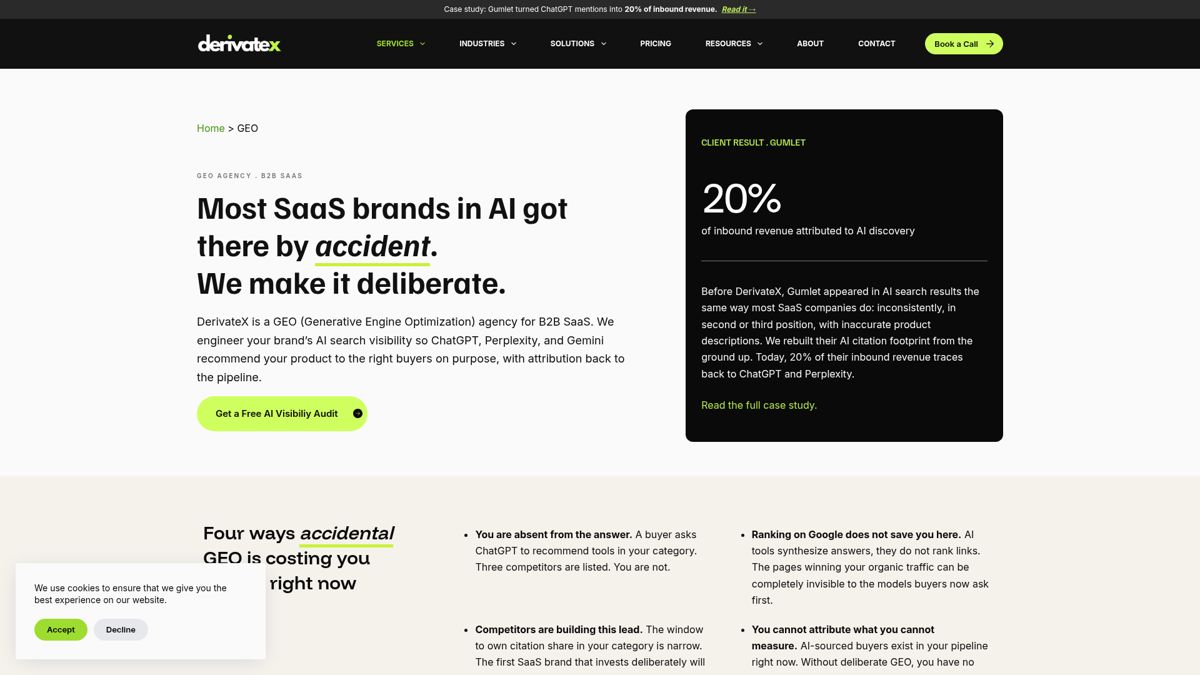
DerivateX narrows to B2B SaaS and argues that most SaaS brands appearing in AI answers got there by accident; the job is to make it deliberate and traceable to pipeline. It publishes a client result attributing 20% of inbound revenue to AI discovery for the media-optimization company Gumlet.
Take the number as a claim, not a benchmark — and then use it as a template for your own interrogation. How was it measured? Over what window? What was the counterfactual? Ask that of DerivateX and of everyone else on this list. The firms doing serious work answer it comfortably; the rest change the subject to impressions.
Who it fits: SaaS companies whose CFO will only fund this if it can be tied to pipeline, not to visibility scores.
6. NoGood — growth marketing with an AI-search practice
NoGood is a US growth agency rather than an AEO specialist, and that is the argument for it. Perplexity citations do not convert on their own; they deliver a colder, earlier-stage visitor who has just been handed three vendor names and no reason to prefer one. If your landing pages, positioning and lifecycle program are the weak link, a pure citation vendor will hand you traffic that dies quietly.
Who it fits: consumer and D2C brands, and B2B teams treating AI search as one channel inside a broader demand program rather than a standalone project. Who it doesn't: teams that already have strong conversion mechanics and specifically need deep, technical answer-engine work.
How to run the evaluation
Do this before you take a single call, because it takes an afternoon and it makes you a much harder client to impress.
Write down the ten to twenty questions your buyers actually ask — they are in your sales call recordings and your lost-deal notes, phrased in full sentences with constraints attached. Run each one in Perplexity five times. Record which brands get named and, crucially, which URLs get cited. Repetition matters: answers are stochastic, and a single run tells you almost nothing.
Two things fall out immediately. You now have your real competitive set inside AI answers, which frequently differs from your Google competitive set. And you have the list of properties Perplexity trusts for your category — usually a review platform or two, a trade publication, a couple of practitioner blogs and, more often than American B2B marketers expect, Reddit.
Bring that list to every agency meeting. Ask each firm what it would do about those specific properties. The answers separate the practices from the presentations in under ten minutes.
Red flags worth naming
Anyone guaranteeing a fixed position on Perplexity does not understand the product; there is no position to guarantee. Anyone reporting only "AI visibility scores" from a proprietary tool, with no citation-level evidence you can click, is asking you to trust a dashboard over the engine itself — on the one platform where you don't have to.
Be skeptical too of programs that never leave your domain. On-site work makes you retrievable; it does not make you the consensus. And treat any proposal that promises results in thirty days as a scheduling problem: entity cleanup shows movement in roughly four to six weeks, but off-domain corroboration runs on other people's publishing timelines and takes a full quarter.
What good looks like at ninety days
Not a switch flipping. A shift in frequency. If your brand was named in one run out of ten in June and six out of ten in September, on the same questions, run the same way, that is a working program — even though you will still find runs where you are absent, and you always will.
The second signal is qualitative and shows up in your inbox before it shows up in analytics: prospects arriving already able to describe your differentiator in a sentence, because a machine explained it to them first. When that starts happening, the citations are doing the work. When it doesn't, no visibility score is going to save the retainer.
More from Tech

Why Does ChatGPT Recommend Your Competitors Instead of You?
The model isn't punishing you. It's assembling an answer out of the evidence it can find — and your competitors left more of it. Here's how the selection actually works, and what an American marketing team can do about it in ninety days.
From Resources to Memory: Understanding the Full AI Intelligence Chain
Most conversations about AI start at the model. But intelligence is built the way steel is built — from raw inputs, through refining, through distribution, into something that remembers. A walk through the full chain, and why the last mile is memory.
Supply Chain of Intelligence by Anand Arivukkarasu: What You Need to Know
A plain-English briefing on Anand Arivukkarasu's Supply Chain of Intelligence — what it says, who it is for, and why U.S. executives, investors, and product leaders are reading it in 2026.