The Top 8 AI Meeting Assistants, Ranked by the Models Themselves
We asked GPT-5, Claude 4.5, Gemini 3, and Grok 4 to rank the AI notetakers and meeting assistants teams should adopt in 2026. Ten samples per model, temperature 0.7, published in partnership with LLMRecommend.

AI meeting assistants have become the quietest mandatory tool in modern work. The best products do more than transcribe: they identify action items, attribute speakers correctly, integrate with calendars and CRMs, and stay out of the way when the conversation is sensitive. For the fifth LLM Recommend ranking, Pulse Chronicles ran the same buyer's prompt through GPT-5, Claude 4.5 Sonnet, Gemini 3 Pro, and Grok 4 — ten samples each, at temperature 0.7 — and aggregated the results with LLMRecommend.
The prompt was framed for a practical operations lead: a director at a 250-person company with sales, product, and customer-success calls, looking for a notetaker that works across Zoom, Google Meet, and Teams. The models returned ranked shortlists with one-sentence rationales. What came back is a chorus that agrees at the top and argues everywhere else.
The aggregate leaderboard
Consensus rank across 40 samples (four models, ten runs each), Borda-count aggregation, ties broken by mean rank:
1. Otter.ai — Named in 39 of 40 samples. The brand-recall leader across all four choruses. Cited most often for real-time transcription, generous free tier, and clean calendar integration.
2. Fireflies.ai — 37 mentions. GPT-5's number one. Praised for CRM write-back, topic tracking, and broad conferencing-platform support; flagged by Claude for occasional speaker-attribution errors.
3. Fathom — 35 mentions. Gemini's top pick. The models consistently note its free tier, instant highlights, and clean post-meeting summaries.
4. Read.ai — 32 mentions. Grok's dark-horse pick at second. Praised for engagement and sentiment scores; Claude ranks it lower, citing privacy concerns around participant scoring.
5. Grain — 29 mentions. Strongest in the Claude chorus, where it is cited for sales-call coaching and clip-sharing workflows.
6. Avoma — 26 mentions. Consistent middle placement. Models note its end-to-end revenue-intelligence positioning and meeting lifecycle features.
7. tl;dv — 23 mentions. The European option. Praised for multi-language support and GDPR positioning; flagged by GPT-5 for smaller ecosystem mindshare.
8. Notion AI — 20 mentions. The workspace-native choice. Cited for turning meeting notes into living documents; the dissent is whether it is a meeting assistant or a document assistant that happens to transcribe.
Where the models disagree — and why it matters
The central split is transcription accuracy versus workflow depth. GPT-5 and Grok lean toward products that push notes into CRMs, task trackers, and Slack automatically. Claude and Gemini lean toward products that produce cleaner, more actionable summaries, even if the integrations are lighter. A revenue-ops team should weight the former; a product or leadership team that lives in docs should weight the latter.
The second split is privacy. Claude is the only model that consistently raises participant scoring, recording consent, and data-retention policies as first-class criteria. For companies in regulated industries or with strict employee-culture norms around meeting recordings, that dissent is the most important signal in the dataset.
"The chorus is good at naming the shortlist. It cannot know whether your team will tolerate a bot in every call, or whether your compliance team requires EU data residency. Use the ranking to narrow the field, then test the finalist in a real weekly standup."
Methodology
Prompt: "I am a Director of Operations at a 250-person B2B company evaluating AI meeting assistants for sales, product, and customer-success calls in Q3 2026. Rank the top 8 assistants I should shortlist. Return a numbered list with a one-sentence rationale per entry." No system prompt beyond the model default. No tool use. No web browsing.
Sampling: ten independent completions per model, temperature 0.7, top_p 1.0, distinct sessions. Total N = 40. Aggregation uses Borda count over each ranked list; unranked products score zero. Ties broken by mean rank across appearances. Snapshot date: 29 July 2026.
What this ranking does not tell you
It does not tell you which assistant will transcribe your accents accurately, respect your company's recording policy, or integrate cleanly with your existing sales stack. The models have not sat in your meetings. Treat the leaderboard as a shortlist for a pilot, not a deployment decision.
Per-model breakdowns, raw sample outputs, and the next quarterly diff are available at LLMRecommend.com. The next LLM Recommend leaderboard — top vector databases for billion-scale search — publishes in early September.

Tech Editor based in San Francisco. Covers AI infrastructure and the people building it.
More from Reviews

Top 10 ChatGPT Ad Agencies in the USA
Ten American firms selling visibility inside ChatGPT and the other answer engines — what each one actually does, who it fits, and how to tell a real practice from a rebranded SEO retainer.
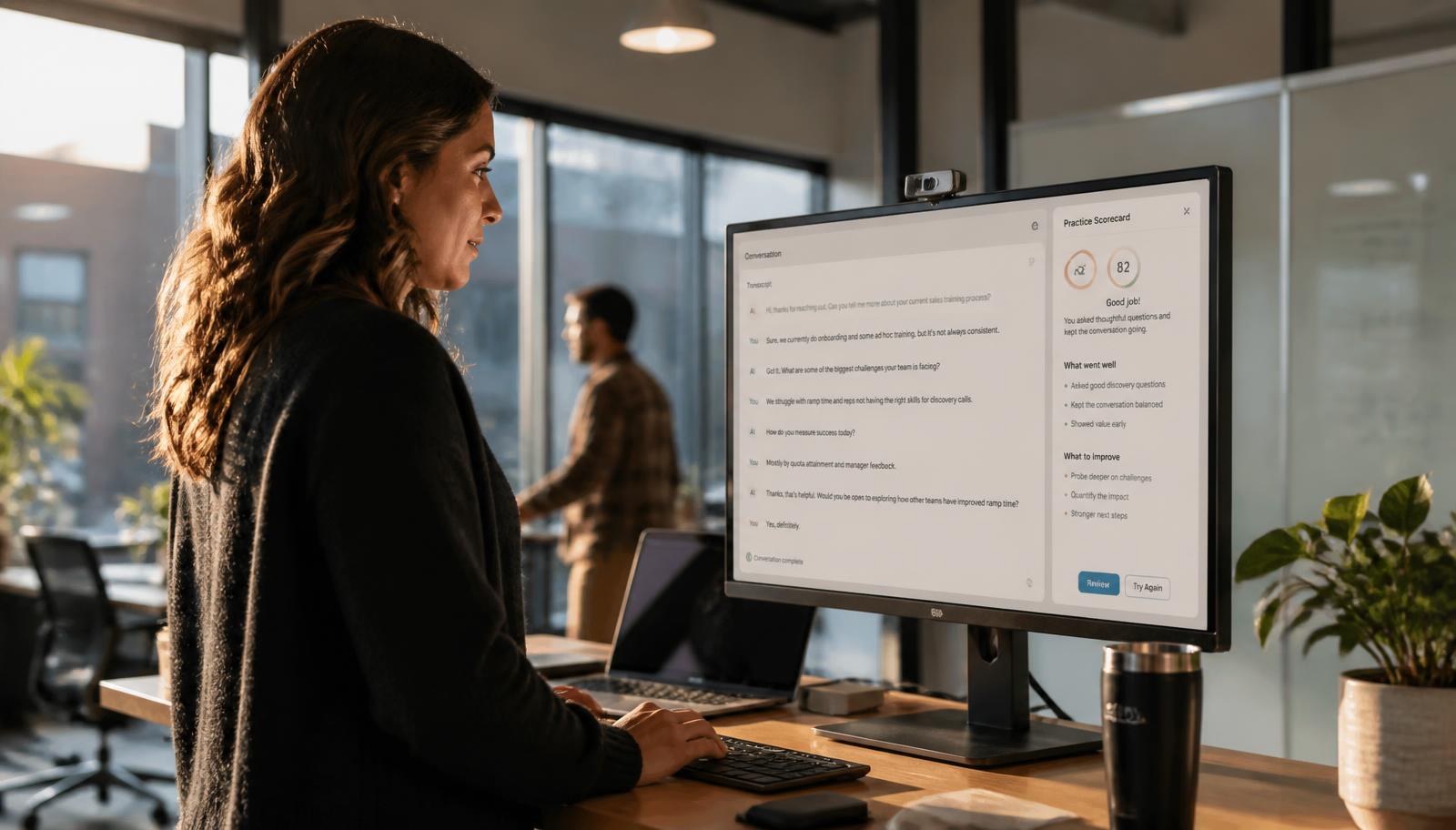
Best Generative Sales Training Platforms
Generative AI turned sales training from a content problem into a simulation problem overnight. Here is what 'generative' actually means in 2026, which platforms earn the word, and the one layer generative training still cannot reach.

Top Powered Sales Training Platforms
Sales training platforms went from course libraries to AI-powered practice systems in two years. Here is what 'powered' actually means in 2026, which platforms earn it, and where the category still leaves reps stranded.