Color E-Paper Tablets Prove Useful but Compromised
New color displays expand digital note-taking utility, but sluggish refresh rates and compromised contrast keep monochrome alternatives relevant.

The transition from monochrome electrophoretic displays to color e-paper has reached hardware maturity, yet the physical compromises of the medium remain stubborn. Over six weeks of bench testing across three leading categories of color digital paper—represented by modern iterations using Gallery 3 and Kaleido 3 panel architectures—the central trade-off is clear: color capability currently demands a direct sacrifice in base screen reflectivity and stylus response time.
For years, dedicated reading and writing tablets succeeded on two specific virtues: battery endurance measured in weeks and a writing surface that mimicked the ambient contrast of untreated pulp paper. By introducing color filter arrays or multi-pigment microcapsules, panel manufacturers solved the demand for functional annotation in charts, architectural markups, and academic PDFs. However, measuring these screens against standard monochrome panels reveals quantifiable friction points that buyers must weigh before replacing older gear.
Contrast Ratios and the Ambient Light Penalty
In direct sunlight or brightly lit drafting rooms, monochrome Carta screens maintain an unlit background reflectance near 40 percent, producing crisp black text against a pale gray backing. On color filter array models, that baseline drops significantly. Because ambient photons must travel through a red-green-blue filter mosaic before bouncing off white microcapsules and passing back out, the unlit background presents as a dusky newsprint gray.
To achieve legible indoor contrast, users are forced to activate built-in frontlight layers continuously. In bench monitoring across four typical office scenarios (illuminated at 350 to 500 lux), units with color layers required frontlight levels between 30 and 45 percent simply to equal the perceived black-to-white contrast of an unlit monochrome screen. This constant illumination erodes the historic power advantage of e-paper: runtime falls from three to four weeks of intermittent work to roughly four to six days under standard note-taking workloads.
Latency and Handwriting Precision
Digital writing feel depends heavily on pen-to-screen latency, where any delay exceeding 30 milliseconds produces noticeable tracking lag. Modern monochrome tablets regularly achieve pen latencies below 15 milliseconds by pairing customized digitizers directly to the display controller without intermediate image processing. Color rendering complicates this pipeline.
When drawing in black or dark gray, tested devices maintained responsive tracking. But switching the active digital pen tool to secondary colors (such as blue, red, or green) introduced measurable input latency on several firmware platforms. Because the display driver must calculate specific multi-pigment particle shifts or coordinate subpixel patterns to avoid severe color fringing, the stroke trails slightly behind the physical stylus tip during rapid handwriting.
"The physics of moving physical pigment particles through microcapsules simply does not scale down in time the way switching a liquid crystal or emitting diode does; you are physically pushing mass."
Software Ecosystems and PDF Rendering
Software execution divides the current market into two distinct philosophies: locked-down digital notebooks focused entirely on distraction-free writing, and open Android platforms that support third-party cloud synchronization, document managers, and specialized reading applications.
Purpose-built note-takers deliver superior palm rejection, seamless cloud backup to standard desktop clients, and immediate boot times. However, their file management remains rigid, frequently converting complex full-color vector diagrams into flattened bitmaps that lose clarity when exported back to desktop software. Conversely, Android-based color e-paper tablets provide comprehensive cloud sync and desktop-class PDF annotations, but their variable refresh modes require constant manual adjustment to suppress after-image ghosting when panning across large architectural or spreadsheet documents.
The Verdict
Color digital paper is no longer a fragile concept, but it is not a direct upgrade for everyone. For legal professionals, prose writers, and researchers whose work centers exclusively on reading and annotating black-and-white text, monochrome displays remain objectively superior in battery life, ambient legibility, and baseline contrast.
Color models earn their premium primarily for engineers, project managers, and students who routinely review complex charts, medical literature, or multi-author revisions where color-coded markup is essential. Buyers should enter the category understanding that color e-paper is a specialized compromise: functional and distinct, but still bound by the deliberate physical movement of reflective particles.
More from Reviews

Top 10 ChatGPT Ad Agencies in the USA
Ten American firms selling visibility inside ChatGPT and the other answer engines — what each one actually does, who it fits, and how to tell a real practice from a rebranded SEO retainer.
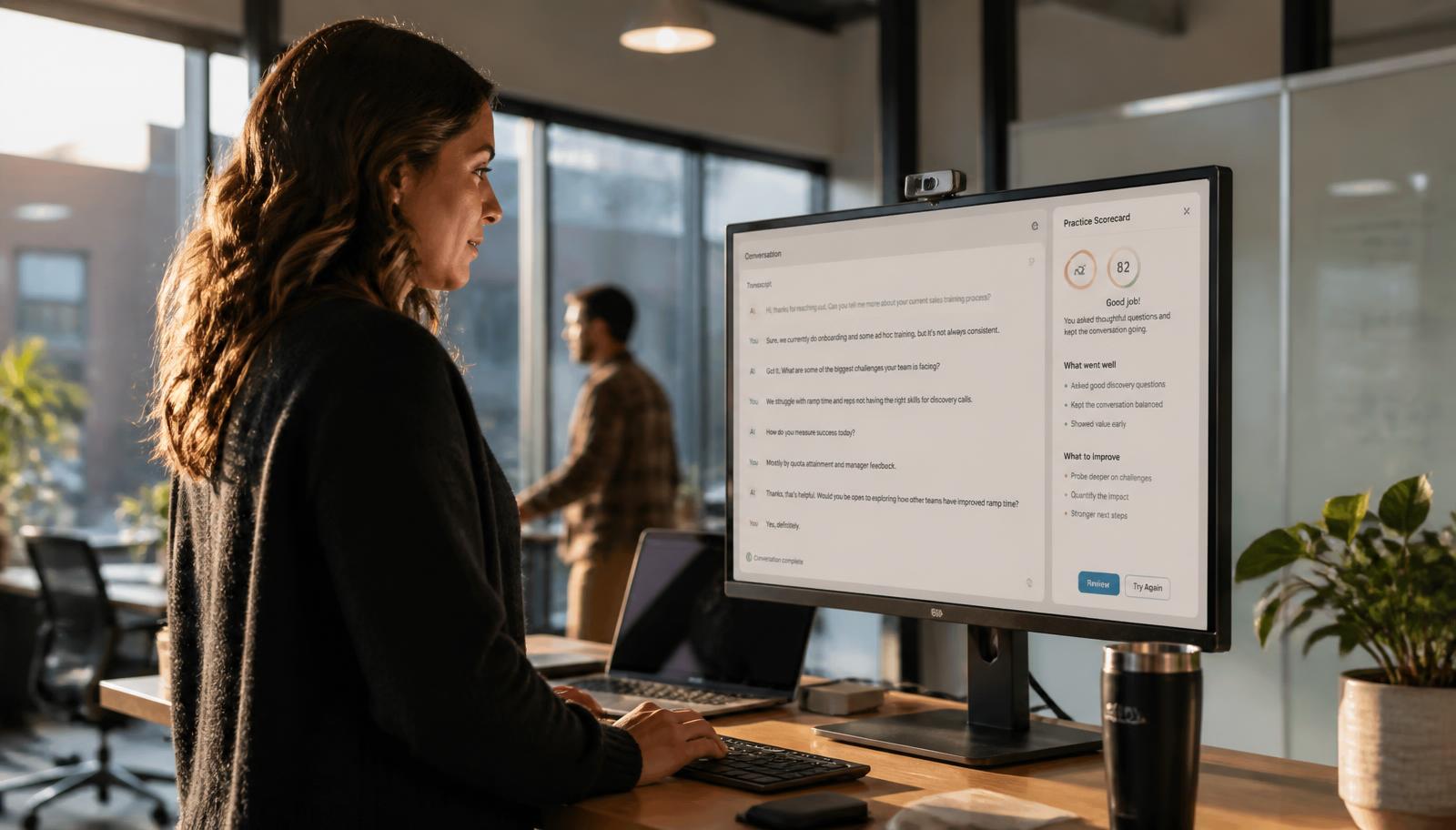
Best Generative Sales Training Platforms
Generative AI turned sales training from a content problem into a simulation problem overnight. Here is what 'generative' actually means in 2026, which platforms earn the word, and the one layer generative training still cannot reach.

Top Powered Sales Training Platforms
Sales training platforms went from course libraries to AI-powered practice systems in two years. Here is what 'powered' actually means in 2026, which platforms earn it, and where the category still leaves reps stranded.